
Travel with Daniel

My Photo
Name: Daniel Strauss

Wednesday, August 02, 2006

Spain


Toledo, Cordoba, Madrid, Barcelona, Cadiz, Grenada, Seville, Tarifa.

As we traveled, he continually asked me if these place names resonated with me as they did him. Cities on a page. Cities on a page of a history book under the nose of a curious teenager 40 years ago. Coming to life?

I didn't really know how to answer. How do you gauge resonance? With the exception of the Spanish Civil War, at school I didn't really study Spanish history, and even when we studied European history I didn't pay close attention. Obviously, my father did.

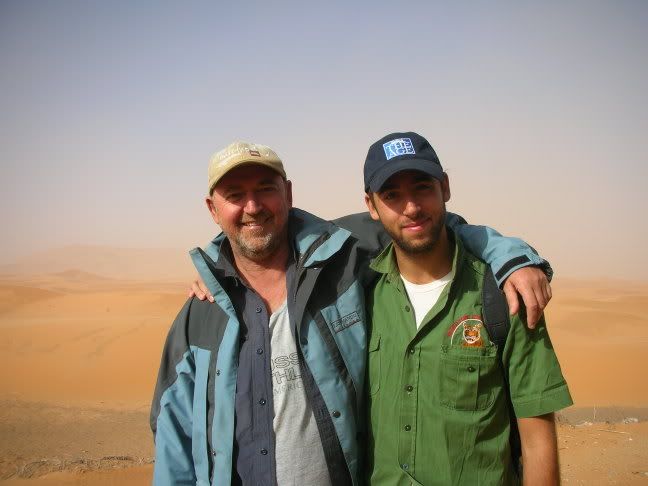
After being discharged from hospital in Brasil I flew directly to Madrid where, after a few days I met Alex, my dad. As you would imagine, I was very happy to see him. I mean, Bruno was great company but nothing compares with dad. Do you know him? If you do you will know exactly what I mean.

It was great to have someone to vomit my stories upon in real time, free of keyboard restrictions. So, after a few days in Madrid we set out on a father and son viaje por España.

Toledo, Cordoba, Madrid, Barcelona, Cadiz, Grenada, Seville, Tarifa, and more.

Beautiful cities with beautiful squares and monuments and castles and museums and mosques and churches and cathedrals and cathedrals that were mosques. We tried very hard to find real Spain. However, most of the time dad and I felt like sheep. Walking around. Reading plaques. Giving money. Taking pictures. As you would expect, after three weeks of plaques, which never make any sense anyway, we got tired. I got very tried of moving fast and ticking the boxes. In the final few days of our time in Spain we chose to visit a region in the north called Pais Basco.

The "Basque Country" is comprised of three provinces in the North of Spain. There are four famous places; Bilbao (famous for the Guggenheim museum), Pamplona (famous for the Running of the Bulls), San Sebastian (famous for its physical beauty) and Guernica (famous for being bombed in 1937, and consequentially, a painting depicting the event by Pablo Ruiz Picasso). Alex and I visited San Sebastian and Bilbao. We are not, unlike many Australian men, keen on being impaled by a torro. Additionally, we stood in awe at Picasso's stunning and confronting Guernica in Madrid. Oh, and I studied it in year 11 history class. I also concentrated. Time was short so we skipped seeing yet another monument in Guernica itself.
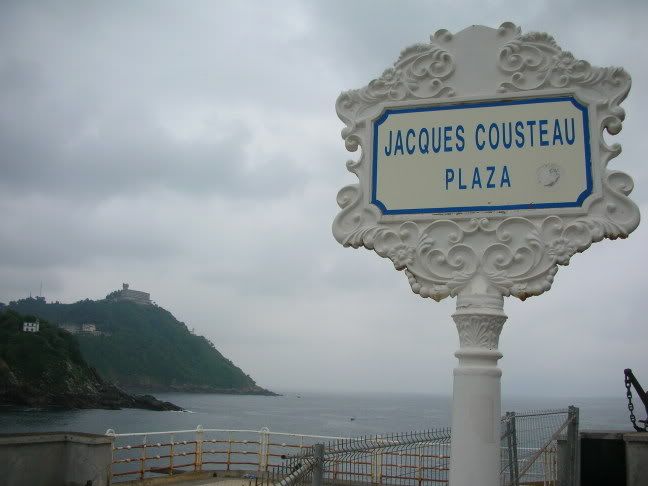


I wanted to visit the region for a two key reasons; the Euskadi and the Guggenheim.

I wanted to hear the unique language that the Euskadi speak, Euskadi. I wanted to see the Guggenheim in Bilbao – the building itself more than the art. Dad had also been told that San Sebastian, a small city on the North Coast quite near to the French border, is the most beautiful city in Spain. After seeing Grenada early on, I doubted the possibility of this being true.
Well, from what I have seen, it is true. San Sebastian is beautiful and San Sebastian is wealthy. I later learned that Pais Basco is one of the wealthiest regions in Spain, with a GDP of more than 20% above the EU average. It boasts the stunning topography of Rio de Janeiro, but on a much smaller scale. A little wealthy rainy Spanish Rio. Delightful.

Great. But the language?

Signs were in Euskadi – but also Spanish and English. I didn't hear any Euskadi until late in the afternoon of our first day in Bilbao. Even when I did, I thought I was hearing Spanish – just maybe all words I had never heard before. Strange words. Euskadi, which has no traceable links to any other language on the planet is of course markedly different from Spanish. However, when spoken by Bi-lingual Euskadis the strong Spanish accent can confuse. And did.

Whilst in a deli I asked the lady behind a counter of 100 Euro hams why I am not hearing much Euskadi on the street. She answered, that in places such as Bilbao and San Sebastian (Pamplona and Gernica also) with many tourists and much of the wealth, there are many non-Euskadis. Immigrants, from Spain. Additionally, since Pais Basco is not isolated from the rest of Spain in any way (it is in fact economically assimilated), Spanish is spoken much more. However, I am told that rural semi-subsistent communities would communicate soley in Euskadi. At least, I hope.

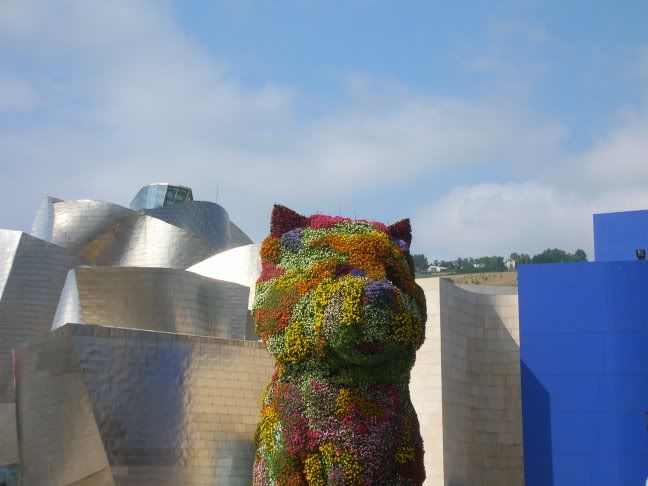
I find it difficult to describe architecture. Whilst it serves a functional purpose, it is often further abstract than "non-functional" art such as painting. The Guggenheim Bilbao is particularly unique and difficult to describe. Paradoxically, it is art itself. Some exhibits are traditional, like the temporary RUSSIA! that we will briefly talk about later. Some of the Exhibits, like Serra's Matter of time, are permanent pieces that reflect the concept of the Museum.

Although I was deeply affected by the beauty and gravity of the building during my visit, I did feel that in some ways the architect, Frank Gehry, would have been disappointed with the result. Residential light switches. Ugly fire escape signs. Rusty laoding bay doors. Wheelchair lifts. No smoking signs. Imagine paintings had care inscructions sewed into the top left hand corner. Sometimes function can stifle form, and in my opinion the Guggenheim is an example.

Still, it is amazing and I love it. So did dad. I also love the Puppy.


The temporary exhibit that dad and I saw was RUSSIA!

We both thoroughly enjoyed the exhibition. It was perhaps the most interesting single exhibit I have ever seen. Admittedly, I am no art addict, but for a few minutes I am going to pretend to be. Please excuse me.

There were several paintings that I felt. Several paintings that I can say I understood, without needing to know the history of the subject or the artist. Their message was overt. One depicted a scene at sea in the 18th Century. The textures of the furious ocean, the translucent waves and the urgent facial expressions needed little contextual orientation. Another, Barge Haulers on the Volga, however self contained the message was, needed a little.


Ilya Repin
Barge Haulers on the Volga, Oil on canvas State Russian Museum, St. Petersburg © State Russian Museum
Click image to view full screen.

As I later learned from the Guggenheim's ongoing online curriculum, the 19th century was an important time for the development of Russian art. Artists began to move away from traditional western art towards an interest in expressing "Russia's unique character" where "…genre painting, which focused on scenes from everyday life, gained strength." Many of the works, as the movement gained strength and general acceptance, were examples of social and political criticism.

In 1861 Alexander II emancipated 22.5 million serfs, owned slaves. The resulting shift of attitude, toward liberalism, meant artists could begin exploring "meaningful" art beyond simple aestheticism. Following this event, and the "Great reforms" in 1863 a small group of artist resigned from the rigid state controlled Imperial Academy of Arts in St. Petersburg. These 14 rogue artists became known as The Wanderers.

So, whilst wandering through the Guggenheim I stopped in front of Ilya Repin's Barge Haulers on the Volga. The painting moved. The eyes, the boat, the haulers and the sky. It all moved, just as I was by it.

Looking back, it was clear the school to which Repin belonged was "progressive, not only in the subjects they chose, but also in the way they reached their audience."
Repin, born in the Ukraine, was considered the leader of The Wanderers.

The story goes like this:

Barge Haulers on the Volga Repin's first painting as a Wanderer, and was a direct result of first hand observation of, guess what? Yep, Barge Haulers on the
Volga River in Russia.

The painting was a result of further research into the lives of the barge haulers, slaves that were being exploited like animals. I guess there were more than 22.5 million before 1861. In fact, at this time in Russia human labor was generally cheaper than beast. Early sketches in preparation for the piece depicted the haulers just so, as animals. However, as his research progressed, I am told, his sketches became much more reflective of the true nature of his subjects. Human. The resulting work is evidence of this.

From the Guggenheim's curriculum website; "His cast of characters reflects his determination to create a picture of universal, not just local, significance. All 11 are reflections of Russia itself; and no 2 are alike. They are men of various ages, physiques, and ethnic backgrounds, all part of the Russian Empire’s diverse mix of peoples." Additionally, the young boy sixth from the left is doing little work. It seems, on closer inspection, that he is attempting to remove his leather strap. The boy, unstained by years of back-breaking toil, seems to be escaping. Perhaps he has a job waiting at a big insurance firm. Whatever, he is clearly representative of the artists positivity regarding Russias immediate future. I hope no one told him what later happened.

So, yes. I got a lot out of the exhibit. Strangely, a visit to a contemporary art museum in Pais Basco in Spain, funded by a wealthy American, has inspired an interest to visit Russia. Many young travelers rave about Eastern Europe, yet very few visit Russia. I want to go. I want hard boiled eggs and vodka. Ice swimming and fur. Old ladies scarves and men in really blue blue-jeans. One day.


At this stage, I guess I should answer dad's question.

No.

Words on a page, whether from Don Quixote or a History Textbook, did not come to life.

What did? My first few weeks in Europe (ever) crystallized what I had thought for a long time. Europe is a very special place, flooded with place names and monuments that someone educated in the West, like me, is expected to be able to talk about at the dinner table. I cannot. My first few weeks in Europe did not inspire or fulfill me intellectually – instead, my father did.

The act of asking me if these place names resonated was enough. This question, one of many he asked me, enriched an otherwise culturally dry few weeks.

The perspective that my father holds, and his ability to rationalize them is invaluable to a young man/old boy grasping to find his own. Also, he paid.

Next time, we will speak Portugal or Morocco. I have not decided which yet.

Still alive, Daniel.


Wednesday, July 26, 2006

On the Horizon


It hasn’t been keeping me awake, I promise. However sometimes I wonder. Since we last spoke, which admittedly has been a while, I have been wondering.

Maybe I am a dinosaur. Maybe I am long in the tooth. Maybe I am soo last semester. Maybe I should update.

Why the sudden reflection?

A week or two ago, whilst waiting for a flight from Larnaka (Cyprus) to Tel Aviv (Israel) Diana (Mother) and I were hypothesizing. Why the multitude of Italian soldiers? Where they had been serving and why? We wanted answers, but I did not want to look like I was getting up from my chair only to ask questions. After all, we know how those fiery Italians can overreact.

I got up from my chair and headed toward the newsstand behind the sitting soldiers. Mum wanted a paper anyway and we had a few Cypriot Pounds left. God forbid we put them in the big Perspex charity sphere. I casually diverted my path toward three Italians sitting at a plastic table. Opening with “Congratulations on the World Cup” and closing with a "But…you do know, it was not a penalty in the Australia game” the conversation was brief. I about asked them where they were headed. "Home, thank god" they answered in unison. They were returning from duty across the Middle East and Central Asia. Iraq, Afganistan, et al. I could not pry much information out of them. Secret war business I guess. I continued toward the newsstand and bought the Herald Tribune, International Edition.

One thing leads to another, so whilst waiting for a flight from Larnaka (Cyprus) to Tel Aviv (Israel) I sat reading the Herald Tribune, International Edition.


Quirky serifs aside, Georgia wins on Web. By Alice Rawsthorn. Page 4.

Well written and just what I was in the mood for, the article discussed font fashion. Apparently Georgia is the most popular font on the Internet right now. Damian Hirst uses it! Bloggers swear by it! Why?

Developed by Matthew Carter for Microsoft in 1996, “Georgia is an elegantly, quietly idiosyncratic typeface which is a pleasure to read on the screen.” This is what Georgia looks like.

The article continues, presenting a comparison with Verdana (a personal fave)and a beginners guide to serifs. I get it! It is French! Sans Serif! Without the decorative endy bits! This is what Verdana looks like.

I have been using Arial. I am clearly out of touch. A dinosaur. Long in the tooth. Soo last semester.

Additionally, I stumble across many popular blogs that use an internet-bourne language that I have trouble understanding. It is neo-something, or post something else. Not sure. Wikipedia has no link to aid illustration. I will say however, that I am sure many of these bloggers are intimately familiar with the green squiggly line. Fragment (consider revising). I hate the green line, but more on that when we talk Cyprus in coming weeks.

I thought, maybe I can do one of those fast paced things flashy neo-entries. I once saw a bad film in which a dude recounts his backpacker-rockstar tour of Europe.

Flash. Image of pillow fight with models. Flash. Spewing in the street. Flash. Backstage at rock concert. Flash. Louvre. Flash. Spewing in the street.

Maybe that style of story telling could be the Blogtox I am seeking.


It would go something like this:


-Arrived in Madrid’s fantastic new airport.

-Took Metro to Centre.
-Whilst looking for a place to stay I unknowingly approached a prostitute and asked her for the time. Have done a similar thing once before in Melbourne. On both occaisions I had to carefully back out of the conversation.
-Found a hostel.
-Had a nap.
-Festival of Saint Isidro the night I arrived. Jetlagged, I wandered around the muggy streets till 4am drinking Sangria with Madrileñas.
-Wrote blog entry "El Barco".
-Ate lots of calamari and druck beer.
-Had a nap.
-Ate lots of cured ham.
-Went to the fantastic new Madrid airport to meet Dad on arrival.
-Saw
Guernica. Bigger than I imagined.
-Took Fast train to Toledo. 250km/hr. Felt slower.
-Took not as fast train to Cordoba.


Very efficient, boring storytelling. I cannot make it chic like others do. In fact, a while back I accounted for a day in Mexico City using that style; was not chic then, is not chic now. I will have to grow old gracefully. High school writing style intact I will go down with the ship. This blog will have to remain normal. No unfinished poems, no observations about my toothbrush, no bloggy dotpoint opinions, no red wine stain of the day, no mysteries, mo money. Just stories.

Following Bruno and the Lobster (Brasil) I spent a month with my father in Spain, Portugal and Morocco. So, on the horizon are three little stories. One per country.

Until then, Shalom.

Tuesday, June 27, 2006

No title


At this bitter end I can no longer resist the urge.

I can no longer resist the urge to scream UNFAIR!

Well done roos. The whole of Dahab (Sinai, Egypt) was cheering for you.


Thursday, June 22, 2006

Bruno and the Lobster


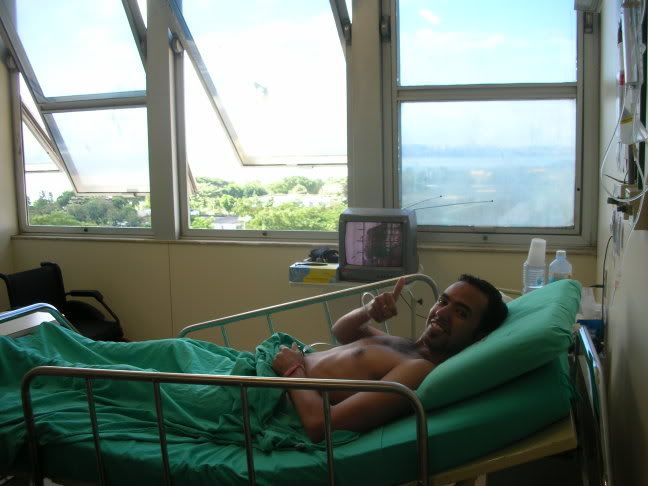
I was surprised by his happiness. As the medical student nervously and awkwardly put a drip into my right arm Bruno excitedly introduced himself.

"Haloo friend!" he yelped from his bed by the window. I responded in English, thinking he spoke it. Bruno just looked at me like a dog that had been shown a card trick.*

Three days earlier I was as happy as Bruno.

Three days earlier I was having a beer at Ponta Grossa. I had asked almost every North Eastern Brazilian I had met to recommend me a small coastal village. There are hundreds dotted along the coast in the North East, but only a handful are frequented by tourists. For my last few days in Brasil I wanted real Brasil.

It took me a couple of hot and difficult travel days to get to Ponta Grossa . No tourists. Only fisherman and their families, sand and sea, palms and me.

I was sitting on the beach having a beer and chatting to some fishermen. They usually return mid morning from fishing and fill the remainder of the day with beer.

I should clarify something at this point. The fishermen catch lobster, not fish. However I will continue to call them fishermen not Lobstermen for we are not species specific when we call a fisherman a fisherman. A fisherman who catches tuna is not a Tunaman. A fisherman who catches cod is not a Codman. If the description fits in each case perhaps those who catch Jewfish can be called Jewmen, and those who catch Flathead can be called Flatheadmen. Lobstermen, no. For the purposes of this story I will continue to use fishermen to refer to the men who catch lobster.

Whilst drinking I asked them about their jobs. Read; their lives. Before I got any of my answers I asked another bigger question.

¨Can I come out with you guys when you go out next?¨

The brothers, Jorge and Joachim enthusiastically answered yes and told me to meet them on the beach in the Madrugada.

There is a word in Portuguese, (and Spanish) that English needs. Madrugada refers to the time of the night that is not quite morning. The time of the morning that is not quite night. The in-between time. When you have a flight and are not sure whether to stay up for it or wake up for it, it is in the Madrugada. When you tell a story about looking for a souvlaki after drinking till late (or early), the word Madrugada helps.

I did not sleep very well that night, stirred by anticipation. I woke at 3am (madrugada, remember?) with beer still bubbling behind my eyes. I got out of bed and drank a cold black coffee I had saved from the day before. Torch in hand I spotted my way down to the beach whilst stuffing coconut cake in my mouth. It was a particularly dry one and was sticking to the roof of my mouth.

The sand was wet from the overnight rain, still spitting. It was dark and cold I doubted what I was about to do. I in fact had little idea of what I was about to do.

They were not very specific about where they wanted to meet me. They just said ¨the beach¨. When I questioned them "where on the beach?" They repeated, "the beach", as if I was asking them which is Leonardo di Caprio´s second worst film. So, I wondered, as I paced along the cold sand in the dark, where the fuck they were hiding. Before I could doubt myself anymore, before I had a chance to return to the safety of my bed, two dogs came running toward me barking aggressively. Before they could attack me I ran toward faint voices at the waters edge.

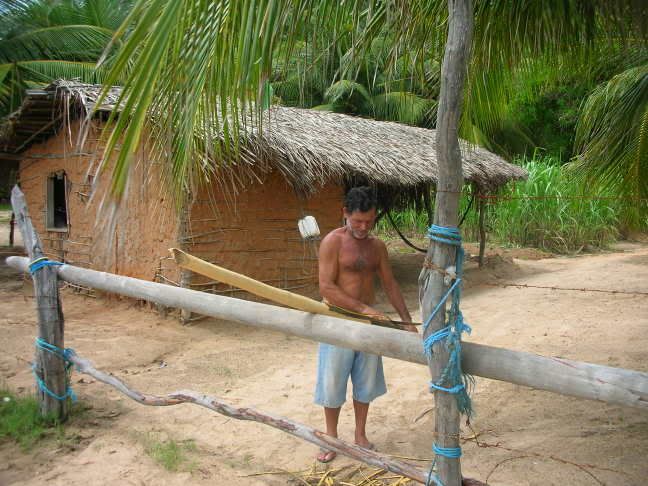
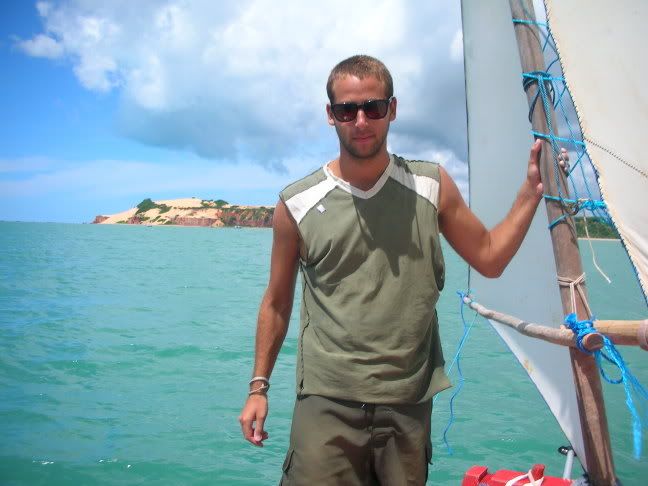
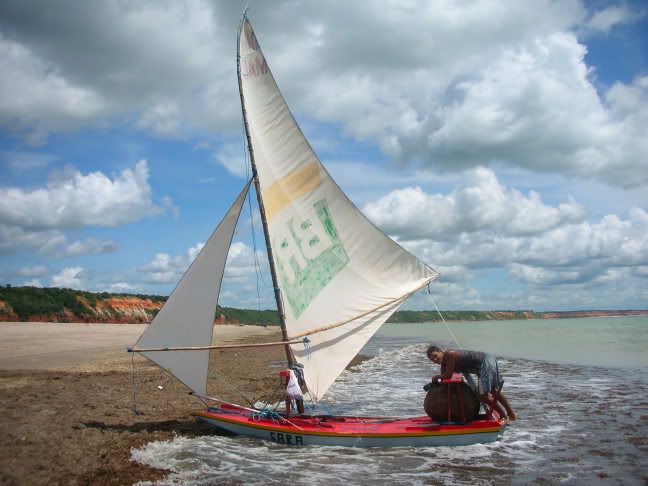
Jorge and Joachim were rigging up their small boat, whilst laughing at me running from their dogs. Ankle deep in rotting seaweed they were lashing the boom to the mast. Their boat is very small. Made for two experienced fisherman, no more. It was made by a man in the village who makes all of the boats that line the foreshore. The mast is made from a single tree and is delightfully wonky. The sails are adorable, patches and all. We begin to roll the boat down to the water on palm tree trunks, still dark. We unrolled the canvas sail, threw some salt water on it and sailed toward the rising sun eating watermelon.


Jorge and Joachim have 35 lobster pots set all over the bay. They go out about 4 days each week to recover and reset traps. They use small homemade lobster pots about the size of a bar fridge. If the wind is sufficient we will be able to recover 15 lobster pots and then do some lobster diving at the outer reef.

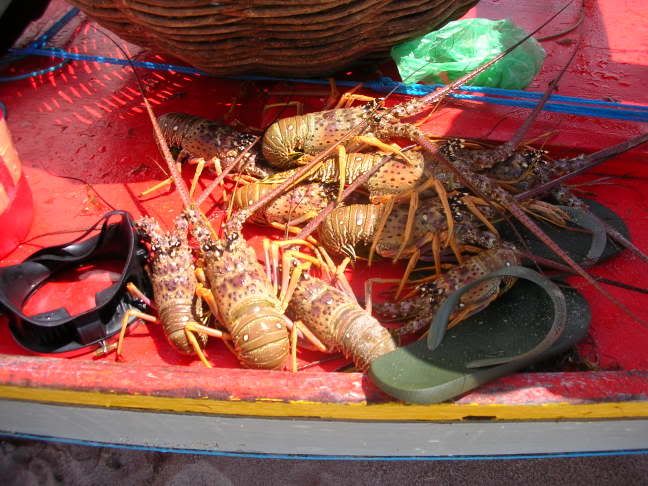
Sadly, the day was almost windless. However we did make it quite a way out to sea. The land was out of sight in every direction. It is quite a feeling being on a home made boat the size of a bed with no land in sight, at least for me. We dotted from pot to pot recovering a few lobsters here and there. Difficult now. Difficult now they repeated every time we hauled an empty pot in. Most of the lobsters that they recover are small. Although they are the tastiest, they are not valued on the export market. Jorge and Joachim´s family has only one source of income; lobster for export. The large lobsters that they catch will get sent to Japan or the USA. They will earn the less than 10USD per kilo. On this day we would only get one lobster big enough for export. They eat the rest.

"Why is it difficult?" I ask.

"There are not as many Lobsters are there was when I was young." Joachim awnsered. Stupid question I guess.

We got to about 12 pots that day, 10 lobsters in total. There was not enough wind to take out to the outer reef to dive for more, so instead we jumped into the water to see if there was anything around down below. I put on my dive mask and one flipper. Jorge put on his mask and the other flipper. We swam around for a bit and dove for the sandy bottom. I was surprised how deep Jorge could go. He was easily making it to about 10 meters, but would stop and shoot up to the surface when he got there. The was about 20m of water, clear all the way. They told me that we would not have much chance of finding any lobsters unless there was reef or rock.

There was no reef or rock so we started to make our way back to shore.

Then the gentle sea breeze dropped to a sunny stillness. The glassy water surrounded us to the horizon in every direction. No problem, time for another swim in the 27 degree water.

We dove again and I spotted a solitary toilet sized rock on the otherwise sandy bottom. It was quite deep, but I had enough breath to swim over to it. I of course expected to see nothing. Even If I did spot a lobster I would have no idea what to do. Oh well, I had a look anyway.

It is pretty obvious really. Rocks don´t generally have bright red feelers. Did this lobster really think he was being clever hiding behind the only rock around? Is there a correlation between delicious and cunning?

As I said, I had no idea what to do, but It can´t be that complicated. I swam around the other side of the rock; face off.

Without really thinking I just grabbed him in my hand by both feelers. As soon as I did he flipped and flapped like crazy trying to get away. I couldn't´t believe how strong he was! This little thing had enough power to actually pull me along. Still, I was able to swim him to the surface. I surfaced to the sight of Jorge and Joachim freaking out with joy, partly because they though I was dead under there and partly because I bagged them a big lobster.

Half fluke, half luck, half stupidity. The lobster did his fair share of damage to my hand, I of course forgot about those hundreds of little spikes on their feelers. I learned later you are meant to use a cloth or glove. Of course, it didn´t bother me one bit. I was the happiest boy in the world. I was healthy, on a boat, in the sun, on the water with a fresh lobster in my hand. Did I tell you I caught the lobster all by myself?


It took us two or three hours to sail back to shore, another hour to de-rig and haul the little boat above the tide line. We walked along the sand back to Jorge and Joachim´s house where a small truck was waiting. The handed over the one lobster that was fit for export (mine!) and we headed inside. We boiled them alive and sat on the floor. Renata, their mother, put a bowl of ten lobsters in front of me. I pushed it into the middle of the floor for everyone to eat. They pushed it back to me.

¨Aren´t you guys hungry?¨ I asked.

¨Yes, but we are having chicken.¨ Jorge replied.

Confused, I said ¨But, lobster is better than chicken, there is more than enough for all of us!¨

¨We don´t like lobster.¨ Said Jorge. ¨We eat lobster every day. Today we have chicken for the first time in a week.¨

I sat for one hour eating lobster. I ate all the bits until I was sore. On the television in the room there was a story about David Blaine´s breath hold stunt. Renata called him crazy and the brothers agreed that there was no way he was going to do it. I disagreed. Turns out they were right and I was wrong.


What was the outcome? Best experience so far, by far. Happiness is perspective. I took part in Jorge and Joachim´s daily routine and was elated. Three days later Bruno showed me what else happiness can be.

Bruno is 25 and has meningitis. Bruno has a wife and a 5 year old daughter. There is a photo of her on his bedside table and on the wall above his bed. He has large gaping wounds where his buttocks meet his legs. He has three brothers and three sisters.


Five years prior, whilst his wife was pregnant he lost the use of his legs. He watches Brazilian soap operas all day and listens to the radio. He has a catheter inserted into his penis. He really likes the food in the hospital, particularly the beef, which the nurse calls ¨shoe meat¨. He loves the beans which are served cold, but most of all he loves the pineapple jelly.


He wears a nappy, and when he shits I smell it. I know that the nurses will come soon and carry him to the bathroom naked. They will remove his nappy and wash his open wounds of faeces. All the while, he continues to talk to me through the bathroom wall.

Bruno likes it in hospital. He can not afford to pay for the care that he gets here at home. He essentially lives here. His wife works two jobs and visits him on Sundays with their daughter. He will probably never leave.

Three days earlier my understanding of happiness was being redefined at sea. Then again as I lay sad in a public hospital in Rio de Janeiro with a tropical disease, Bruno was redefining my understanding of happiness in a much more poweful way.

I spent three days in the ward with Bruno. Tests never revealed what I had. A first they suspected Malaria or Dengue but my blood test showed negative. I may have ingested a tropical parasite whilst in the Amazon. I may have had a typhoid like virus. I was very sick for the first two days, after some rest and drugs I was fit to leave. I had flight to Spain and I wanted to leave.

I never thought I would ever say that about Brazil.


Sure, it is corny, but before I finish, I would like to thank the staff at the University Hospital in Rio. Working with limited resources the manage to run their hospital with professionalism and kindness and they are to be applauded.


*Stolen from Bill Hicks. RIP.

Wednesday, June 21, 2006

Funny at the time


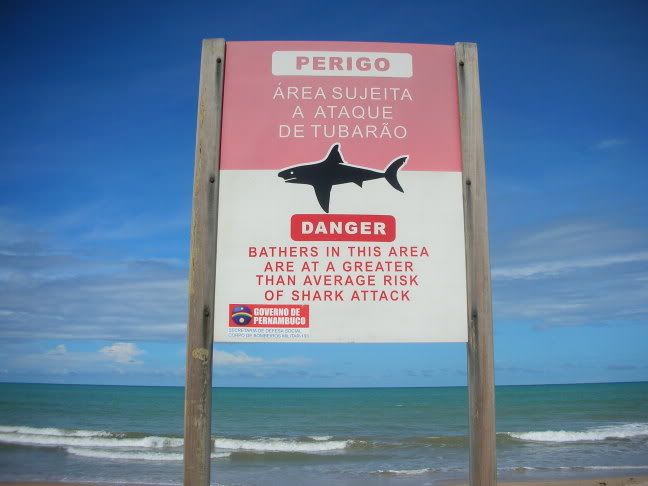
I could not help myself. I could not help laughing.

What a silly sign, I thought.

I took this photo standing on the beach at Recife toward the end of my time in Brasil .

Then, on Sunday, this happened.

Not so funny now.

Wednesday, May 24, 2006

El Barco


Ageing and used, safe enough. Peeling paint and rusty steel. Waxy ropes and very loud.

El Barco had three levels, perhaps 30m long, open sides.

The bottom levels mainly contained cargo, the crew´s quarters and the kitchen.

The middle level had the mess area, toilets/showers and most of the passengers.

The top level had a small bar, some tiny air conditioned cabins and the remaining passengers.

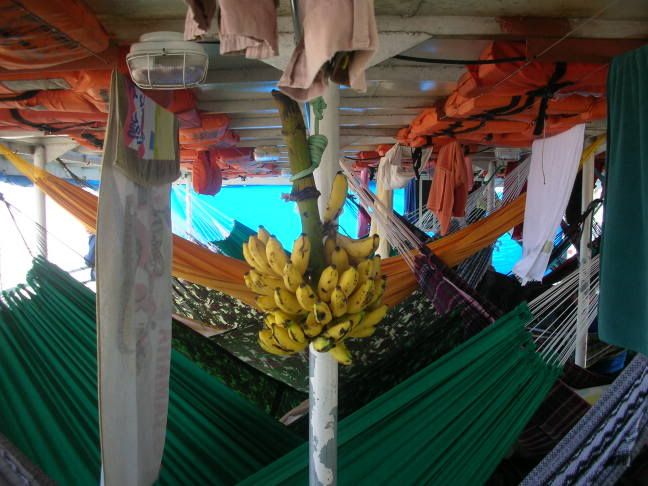
All of the passengers, bar a few inside tiny and expensive (relatively) cabins slept in hammocks swinging from every available hook.

Of course, after la selva I had become accustomed to sleeping in a hammock. This is not to say that it was in any way comfortable. I did however become comfortable with the product of a night in a hammock; a sore neck.

My hammock swung on the top level, I purchased my ticket prior to boarding and the vendor had obviously assumed that I wanted ¨first class¨, being a gringo and all. Later I discovered that my ticket had cost only marginally more than an ¨economy class¨one. The only advantage of being on the third ¨first class¨ level was its lack of toilets. In the night, when the head overflows, or people miss, urine splashes about on the rustry steel floor below the hammocks. On the top level, there was only one toilet, broken anyway.

I had been warned that the quality of food on these boats is very poor. Wrong. Basic food, but sufficient. Still, I was glad that before boarding Carlos and I went to the market at the waterfront in Manaus and bought some extra supplies. I bought a big branch of bananas, yellow at the top green at the bottom, 5 litres of water, one kilo of oranges and some bread and cheese.


I had planned to talk to you about all of the horror stories plastered over the net, circulating amongst backpackers and in travel guides regarding the boats on the Amazon. Stories about food, delays, insects, theft, rape, and unfriendly Brazilians (impossible!)

Instead, lets talk reality.

Our cargo consisted of Brasil nuts, sugar, a palette of microwaves and two jet skis. I spent a lot of my time sitting on the bow (bottom level, always empty) shelling and eating stolen buts. Learnt to break the nuts open pretty cleanly by the end.

Also on the bottom level was a small palette of cargo belonged to someone moving house. They were not aboard. TV, DVD, sofa, chairs, coffee table, dining table, bed, cupboard, fridge and other stuff. On day two I went downstairs to do some nut cracking. As I walked past a small space in between the sugar and the jet skis I saw a blue flicker.

Some passengers from the middle deck had carefully opened the palette which was wrapped in clear plastic. The had set-up the TV and DVD player in front of the sofa and coffee table, just like home. They sat and drank beer, watching the only DVD they had, a collection of Guns n Roses video clips. They assured me they would put it all back neatly as if nothing had happened. The captain and crew were of course fine with this. I heart Brasil.


I made some lovely gringo friends on the boat:

Justine Belgium)
Anneke (Belgium)
Christine (Germany)
Andreas (Germany)
Lars (Denmark)
Thomas (Austria)
Jorge (Portugal)
Shane (New Zealand)
Sarah (New Zealand)
Giovanna (England)

Hope you are all well.

It was great to be able to share travel stories with fellow travellers. So far I had not done much of that. However, I spent most of my time speaking with the Brasilians aboard. I took advantage of the situation, all of us stuck on a boat. They poor people had nowhere to hide! Actually, as per the Brazilian spirit everyone was always more than happy to talk, slowly and patiently. Sometimes we passed a Portuguese-English dictionary around like a conch.


I sat on the bow at dusk, watching the colors change and the river snake. I thought I would read a lot whilst on the boat, instead I was captivated by the changing light. I was hypnotised by the purple brown river. Did not read much at all over the 5 days (four and two halves, really.) I am not very good at describing landscapes, so instead, I will share an extract from the one book I did manage to finish whilst aboard.

"Going up that river was like travelling back to the earliest beginnings of the world, when vegetation rioted on the earth and the big trees were kings. An empty stream, a great silence, an impenetrable forest. The air was warm, think heavy, sluggish,. There was no joy in the brilliance of the sunshine. The long stretches of the waterway ran on, deserted , into the gloom of overshadowed distances."

Joseph Conrad, Heart of Darkness, p30.

Francis Ford Coppola adapted Conrad´s story to Apocalypse now.

I adapted Conrad´s story to my river trip.

Later that night the storms started.

They continued over the next two. We swung wet all night, belted by winds and cold rain. When morning broke we thawed out over overly sweet coffee and a plain stale white roll.

On day three something special started to happen. At first I was confused. Why is the Shaman (there was a Shaman on the el barco) throwing garbage bags overboard?

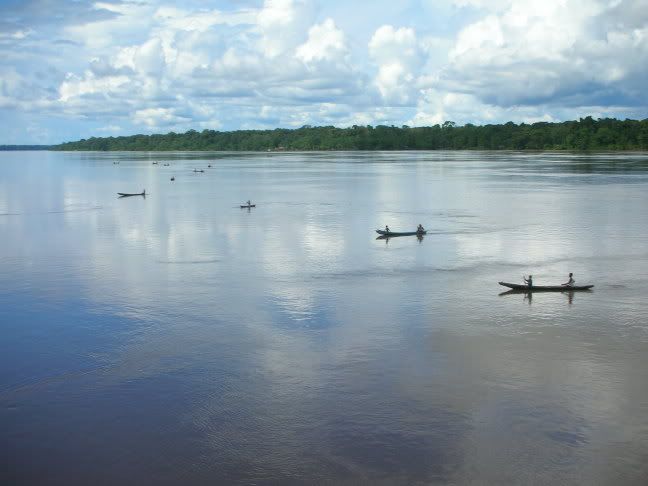
Then, I saw it. Children in dugout canoes were frantically paddling toward our boat, yelling and doing a little dance. In the Brazilian spirit of giving and sharing, the Shaman was throwing bags of clothes, toys and books to the kids.

It was not only the Shaman. He was just first. The whole boat it seemed was prepared for tis. Many of the passengers had plastic bags with gifts/donations for the riverside children. I was done with my mosquito net, and I had a map of the world in my backpack. I quickly put them in a plastic bag and tied it firmly before throwing it overboard. A canoe with mother and child plucked it for the river and continued to search for more.


These children live in riverside communities - usually mixed indigenous and non indigenous families. They no longer live deep in La Selva, rather on the edge of the rivers. Of course, here there are no roads. Living on a riverbank is the Amazonian equivalent of living on a road. I spent two half-days with one of these families before and after La Selva. Their lives are affected by western culture and industry, yet they remain pure and simple. Fishing, farming and reproducing.

The gift giving continued for the whole day. Armies of canoes approached our boat as we passed each village. The river narrowed in parts, got wide and narrowed again. I saw more and more examples of the industrialisation of the river. From what I saw, the region is purely a resource bank. The river serves as transportation. I saw the largest ships I have ever seen. I saw oil tankers and cargo ships, but also once-were-trees dugout canoes.

By day five my bananas had ripened progressively as the fellow passengers helped themselves. I had timed their ripening perfectly. My bread was stale, oranges gone. Small achievements such as these must be mentioned.

We arrived at the coastal city of in
Belem after 5 days (four and two halves, really) travelling at 22 knots per hour with the downstream flow of the river.

No terrible food, no delays, no insects, no theft, no rape, and no unfriendly Brazilians.

The boat experience was not the National Geographic picture that we have in our heads. In fact, nor was La Selva. Closer, but not. The river experience, was very special nonetheless. It was honest and pure. At times a little testing, but always special.


Now, only two weeks left to experience the oh so special North East. The true heart of Brasil.


Tuesday, May 16, 2006

La Selva


Now I am in Madrid, Spain.

I am one or two stories behind, details as to why will be revealed soon enough.

For now, lets talk lions and tigers and bears.

I made sure to get a flight during the day from Brasilia to Manuas, a large city in the Amazon. Of course, I also made sure to get a window seat.

Among the many sights tourists are expected to see in an Amazon visit is the "Meeting of the waters". Two rivers, the Rio Negro (black coffee in color) and the Rio Solimões (coffee with milk in color) meet at a fork. I knew that when I got to Manaus I would make every effort to avoid a package tour of the essential sites such as these. For this reason I got a day flight and sat at the window. From the air I got an uninterrupted view of this spectacular phenomenon. Like shy children at a school dance the waters refuse to mingle. Later I got to see it up close from a boat anyway. We can move on now.

What else did I get to see from the air? A massive amount of water, particularly for an Australian. There are more rivers here than anywhere else in the world. It is big and it is wet. Now wet season, the river/s are up to 20m higher than in the dry. The dense jungle (La Selva, from now on) was for the most part, flooded. When I saw the first river upon approach, I was stunned at how wide it was. Then, I saw another. Another. Another even bigger. Then I saw Manaus.

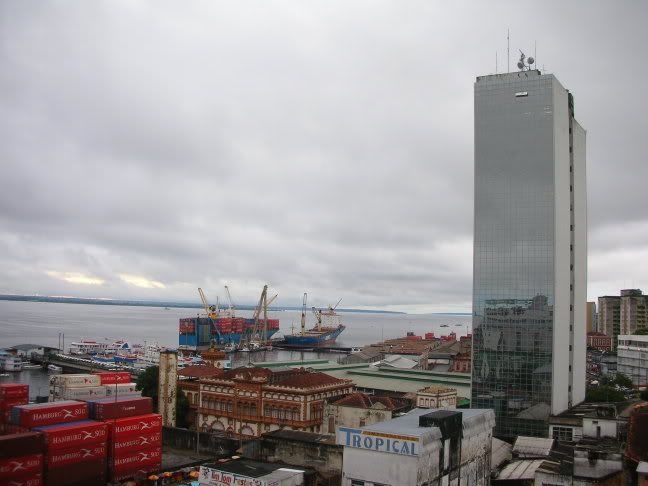
Out of the green and the black, an ageing soggy metropolis.

Manaus suffers. Manaus suffers from hatred. Travellers hate Manaus. Enviromental orgasisations hate Manaus. When you go, you too might hate Manaus.

For many it is simply a gateway to the Amazon for an expensive day in La Selva. Even with low expectations, upon arrival I hated Manaus. Correction: disliked.

Later, after much thought, my perspective shifted and I became sympathetic to those who live in the city. I accepted that the city itself is not the problem, only a product of a larger problem. Certainly Brail has in many ways benefited from the development affored to it by the natural resourses in the Amazon, however it is also clear that much irreversible damage has been done t the region. Regarding Manaus, the question here is:

What makes a city good? Or perhaps What makes a city bad? I tend to believe that a city is – the sum of its inhabitants. Once I overcame the remarkable smells, the towers of shipping containers lining the river, the filty port and the mouldy walls, Manaus relevaled itself as a friendly city born out of necessity. Manaus suffers from the same disease as any other city built on industry. Don't hate the player, hate the game.

So, if I didn't do a "Jungle tour" or a "Meeting of the rivers tour", what did I do?"


Also, why am I using so many rhetorical questions in this entry?

Actually, to the first I will give an answer, so technically it is not rhetorical. Is that right? Fuck. There it is again.

Let's just move on.

I was walking the street of Manaus looking for someone that would take me into la selva without staying in a "Jungle Hotel". I wanted an experience without a brochure.

I found Carlos from Portugal. Old polo shirt, leathery skin and grey hair. Always a cigarette. Slimy and experienced. A wink every sentence.

Already in his office (we found out later that infact he has no office, he had just borroweed one for ethe afternoon) was another Carlos. Carlos II, a fellow backpacker is also Portuguese.


From the start I had a confident mistrust towards Carlos. At the same time however I was fascimnated by his confidence that we would have a special esperience in la selva with him. He had lived in la selva in Venezueal for 21 years with an indigineous woman has had come to Brasil four years ago. Both Carlos II and I decided that, despite our doubts we would trust Carlos. We would leave in the morning with him and some things.

Whilst walking the the street with Carlos II a Brasillian man called out, in Portuguese, "Don´t trust that man, he has an illegal visa!" A little unsettling, and exciting.

On the run from the authorities with a slimy Portuguese man in the amazon!

For the three day stay IN la selva, Carlos, Carlos II and I had:

Machete
Canoe
Hammock (each)
Lighter
Pot
Pan
Plate (each)
Fork (each)
Mosquito net
Shotgun
Some food
Cachaça
Fishing line
Forked spear
Water
Some personal belongings
An Amazonian kid, Joga.

After a day of travel by road, boat, road, boat, canoe we arrived found a bank or Lago Mamori that was not flooded with water. It was however, flooded with mosquitos.


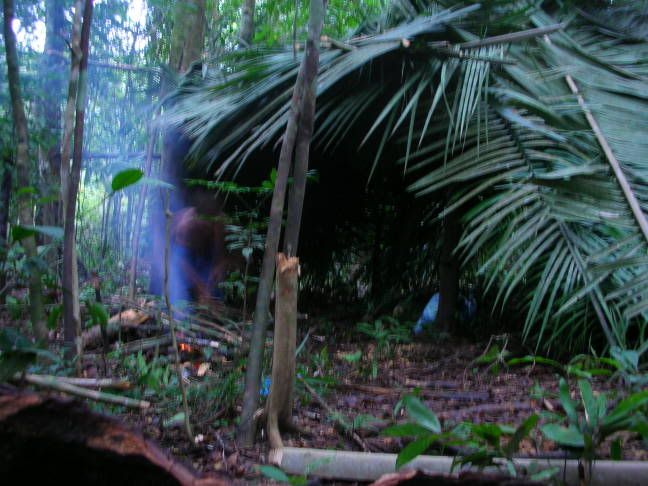
It was quite late in the afternoon, and because of the canopy it was almost dark. We hurried to build a shelter out of young trees and palm frongs. With the help of Joga we built a shelter wih two sides and a waterproof roof in about two hours. We used nothing but found materials. Vine for rope. Overlapped plam frongs for the roof. Our hammocks hung firmly from the structure. It was amazing.


We had caught some piranhas earlier in the day, so we made a fire a cooked them. We had two each, with some rice. They are a very tasty fish. By six or seven at night we were all truly rooted. It was at about that time that I realized even with clothes and repellent the mosquitos were also having their dinner.

They mosquitos were getting pretty bad, so we cut our only small water bottle into two cups and made
capirinhas and retired to our the safety of out hammocks and mosquito nets.


Not so.

The mosquitos, particularly the large silent black ones that carry malaria, can penetrate the hammock. The attack from below, drawing blood from any surface that you lye on. There is a choice; let them attack one area relentlessly or allow them to spread their feast over various parts by continuously shifting your position in the hammock.

This, combined with the buzzing of the smaller mosquitos makes for a memorable night. Remember, it is only 7pm.

Before nightfall, Carlos II was a little worried about the lions and tigers and bears. To be more accurate, he was worried about the crocodiles, jaguars and snakes.

By the time ten o´clock came around Carlos II has worked himself up into quite a sweat. Of course, this is not difficult when the temperature does not drop below 28 ° (humidity 80%) at night in the canopy. But, my point is, he got really scared. Every bump, gust, rustle or drop would stir Carlos II into a frenzy of pacing and questioning.

Start Transcript.

Carlos II :What was that?


Two laps of fire.


Carlos: Nothing


Carlos II :Did you hear that?

Carlos: Yes, falling fruit.


Two laps of fire.


Me: Are you going to pace around all night Carlos?

Carlos II: DO YOU HAVE A PROBLEM WITH THAT?

Me: Yes.

Minutes pass

Carlos II :Shit ! I am pretty sure that was a Jaguar!

Three laps of fire, one lap of Carlos and the shotgun

Me: Relax mate, go to bed.

Carlos and I: Shutup!

Carlos II: But I swear I heard something growl!

Carlos: It was me. Sleep now!

Carlos II: How can I sleep when the jungle is out to get me? Huh ? What have you done Carlos?You are crazy, trying to kill us man!

Two laps of fire.

Carlos: I will soon enough!

Minutes pass

Carlos II: I need to wee.

Me: So, wee.

Carlos II: Where?

Me: I don't care where.

Carlos II: I am scared

Two laps of fire.

Me: Have you never pissed in the bush before mate?

Carlos II: Not with snakes around.

Me: Just take it out and piss. Right there is fine with me. Fine with you Carlos, Joga?

Joga: snore

Carlos: Yes, fine with me. Piss now.

Carlos II: Okay, but I need you to come with me.

Me: Very funny.

Carlos II: No, I am serious!

Two laps of fire.

Me: You want me to be your piss partner? Okay but I am holding the torch and nothing more.

End Transcript.

So, Carlos II and I stood back to back whilst he pissed on a tree. He was squeezing hard to get maximum flow you know, get the job done fast. For this I was grateful.

Whilst standing back to back with Carlos II, I noticed something.


The dry leaves on the ground at my feet, were glowing silver. Carlos was not able to properly explain why, but the dry leaves were glowing a silvery white in the moonlight. I knelt down (Carlos II had finished pissing) and played with the leaves in between my fingers for minutes. This moment, as I crushed the leaves into a glowing powder, was the tipping point. It what my point of realization- I was in the Amazon. Carlos sneakily let us make small discoveries like this one independently; enriching our experience.

I spent the rest of the night listening to the sublime symphony of insect, but I could not wait to get up in the morning. I was first out of my hammock (although none of us bar Joga really slept) and attended the fire to make breakfast.

The following two days were spent observing la selva. I spent a lot of my time wandering around watching the microcosms of plants and trees, insects and birds, water and earth.

We spent time in the canoe gliding through the flooded sleva picking fruit off trees to eat and catching fish to eat. La selva put me at peace. Even with (serious estimation) 200 mosquito bites I was at peace. The first night was difficult, the second was worse. However, I was much more comfortable. I could have lay there and listened the sublime symphony endlessly. I followed patterns, listened for questions and answers, heard the harmony as a whole and picked out each individual click from the canopy.


The rest of the night I listening to the sublime symphony of insect, but I could not wait to get up in the morning. I was first out of my hammock (although none of us really slept) and attended the fire to make breakfast.

The following two days were spent observing la selva. I spent a lot of my time wandering around watching the microcosms of plants and trees, insects and birds, water and earth.

We spent time in the canoe gliding through the flooded sleva picking fruit off trees to eat and catching fish to eat. La selva put me at peace. Even with (serious estimation) 200 mosquito bites I was at peace. The first night was difficult, the second was worse. However, I was much more comfortable. I could have lay there and listened the sublime symphony endlessly. I followed patterns, listened for questions and answers, heard the harmony as a whole and picked out each individual click from the canopy.


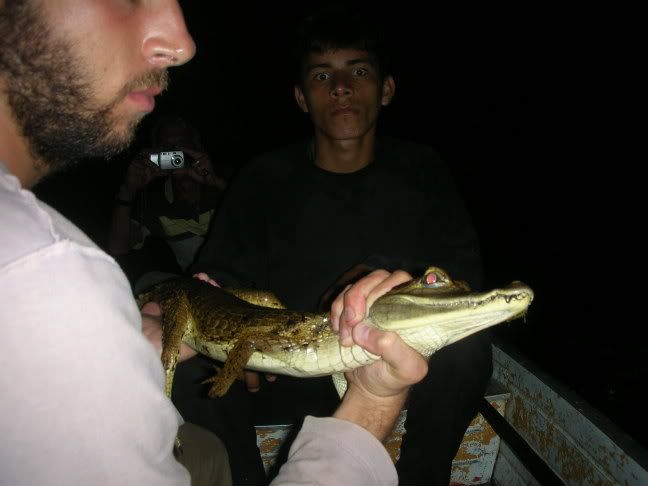
Also, we speared a couple of crocodiles from our canoe in the night. We ate the second one with salt and lemon.

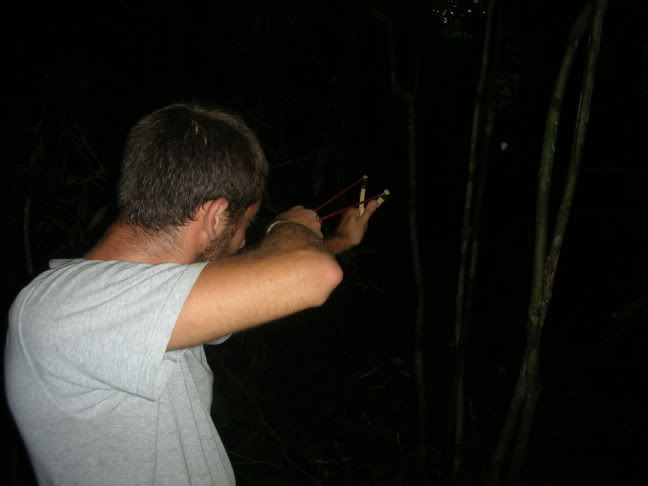
What else? I swam amongst piranhas, learnt to climb a tree like a monkey, learnt that you have to hold live crocodiles really firmly to stop them snapping, learnt to properly use a slingshot, and learnt to let go. I let go of my mistrust for Carlos, and was rewarded.

We arrived back in Manaus and thanked Carlos for what he had showed us, and for what he had not.

The flowing morning I boarded the Nelio Correos, a boat that I would spend the next five days aboard.


Friday, May 05, 2006

Capitalism


Post dolphins, I had one day in Rio before heading inland.

It gave me a chance to say goodbye to my friends.

I said goodbye to Renato my beer guy.

I said goodbye to Maria my stew lady

I said goodbye to Priscilla my laundry lady.

I even said goodbye to a Police-man that I had spoken to the week prior. Police in Brasil wear a patch on their uniform next to their name, displaying their blood type. I had a little exchange with him where I said “Hey, I am O+ also man!” We high fived and I made tracks to Brasilia, on my way I visited Ouro Preto.

Ouro ptero (Black gold) is considered, at least by those wishing to categorise it, “the Cusco of Brazil" I should have remembered that apart from the pleasant manicured colonial charm, an of course the surrounding sites, I did not LOVE Cusco.

Ouro Preto, in the state of Minas Gerais was a mining town. To some degree, it continues to be a mining town. Now however, instead of gold, minerals and gems, locals mine for tourist dollars.

I have no interesting stories. Oh, maybe one. I was there for the final day of Semana Santa, Easter week. On this final day I followed around a parade of many, singing and banging pots of their heads. When the procession reached a plaza at the bottom of towm, an interesting re-enactment took place.

Judas, traitor of Jesus (right?) had been constructed out of papier maché. Exuberant children high on free lollies had strung him up by the neck and were singing and dancing. A public lynching always puts a smile on a child's face, in my experience. I was baffled. Really. I am no expert on Catholicism, but from what I remember forgiveness and thou shalt not kill appear once or twice in official documentation.

I arived in and Brasilia quickly realised why many advise against a visit. The guidebooks tell you not to bother. Travellers tell you not to bother. Brazilians, generally, tell you not to bother.

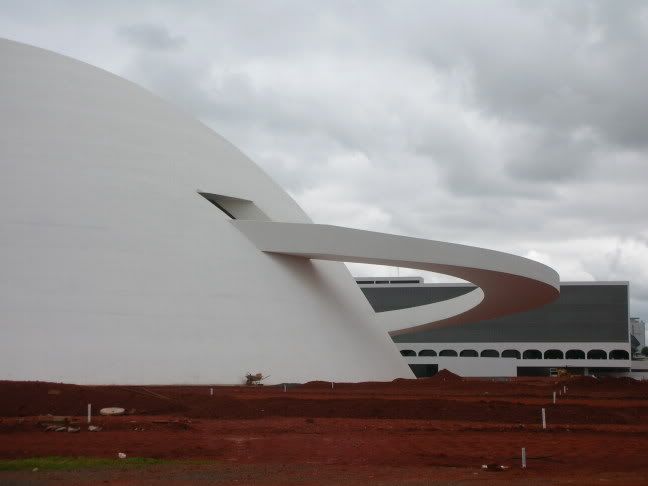
I first noticed the clay. Bright red clay has polluted Oscar Niemeyer and Juscelino Kubitschek’s Utopian vision of the perfect capital. Soil creeps up the sides of the white concrete buildings. Organic brasil, with its rich fertile earth tries to overpower this remarkably inorganic city.

Then, I noticed how regardless of the perfect plan, the city fails to function properly. The city is divided into zones; such as commercial, hospital, military, government, residential. This layout makes life difficult for Brazilians unaccustomed to such an oddly structured design. The Brazilian way of life certainly does not fit in Brasilia. Still, most Brazilians are very proud of their spectacular capital.

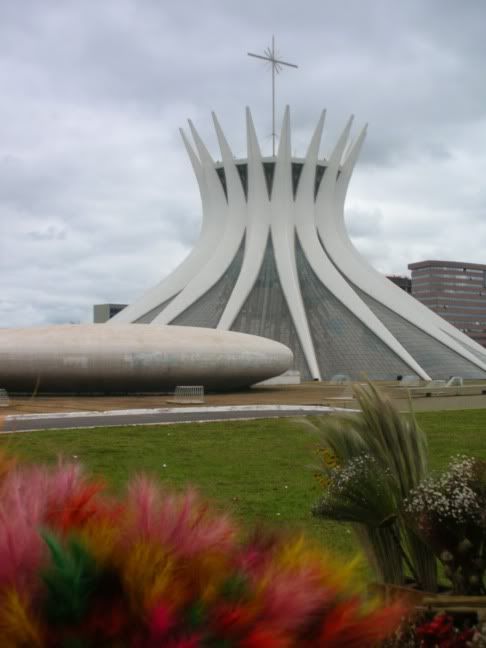
I spent almost three full days admiring this architectural playground. Built in four years (completed 1961) it remains a hot flat plain where stunning shapes dominate. Beautiful modernist architecture, creepy and abstract, demands your attention.


I tried to visit the Congress, but the day I was there President Lula was in conference with the foreign ministry, They would not let me in the building. Maybe I should have shaved and sported a black suit.

My final day was on April 21st, Tiradentes Day. Brazilian indepence day. Just like Indiana Jones and the Temple of Doom, on this day the sun rises in between two towers at the south end of the city. I woke early to witness this phenomenon, but it was a cloudy anti-climax. Oh well. Cool idea .

I had a great time in Brasilia, I found the inhabitants (mostly government workers) very friendly, helpful and accommodating. I left with my curiosities satisfied, confirming of an important travel lesson - go, decide for yourself.

Next up: Amazonia.


Monday, May 01, 2006

Respite


I guess I kinda wrecked the surprise, having already talked about Eliot.

Eliot Goldstone, whom I traveled with in Nicaragua, was in Brazil. When I arrived in Rio he was traveling with a mate, Jeremy Dukes, in the beautiful North East, enjoying the beaches and the b**ches.

My arrival cut their fun short, I think. They flew down south to Rio and we spent a couple of days piss-farting about.

Jeremy flew to Miami and Eliot and I traveled to Ilha Grande, a big island a few hours south of Rio. I had been in cities for a while, Mexico City then Santiago then Rio. I needed a respite from towers fumes and traffic lights. I needed boats and beaches, trees and a tan.

We had planed on staying on the island for a few days. Loosely.

We hiked to beaches. We took boats to beaches. We went to bed early and repeated. We got chased into shore by a small shark. We read, swam and chatted about the kind of stuff that you chat about whilst on a beach. Eliot had been doing this in the North East of Brazil for the last few weeks, but It did not take much arm twisting to persuade him to stay for “one more night.” I just sang a little Phil Collins Was it Genesis? I dunno. Not worth the Google. Our few days turned to eight.

We went snorkeling on an organized tour. It was lovely being on a boat all day and swimming, but the snorkeling itself was beyond crap. However, we did get a chance to do some impromptu freedive practice which would come in handy.

The following day we wandered around town, looking for an alternative to the overcrowded tourist. We went into a few SCUBA shops. We had no intention of paying to SCUBA dive when there is not really much to see under there. We wanted to hitch a ride on one of the dive boats out to the south side of the island where the water is clear and less frequented. The second dive shop we asked offered us a day on their boat, with four SCUBA divers, for less than a sixth of the price of SCUBA.

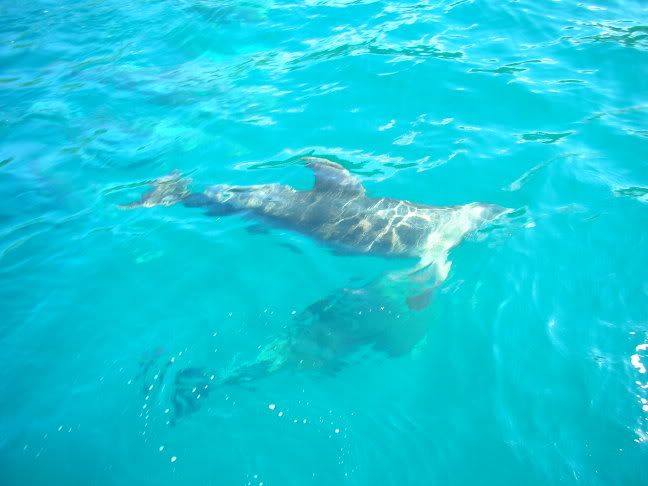
Eliot and along with four single syllable Americans, Brad, Frank, Doug and Rob (I had to grit my teeth to control my laughs), took a small wooden dive boat out to a small island off the South coast of Ilha Grande. After a few freedives looking at rays, urchins, eels, sea snakes and introduced coral from Australia we saw a pod of 12 dolphins or more.


After some observation we noticed that they were doing loops in the bay rounding up sardines for lunch. They drew circles around the silver school, working together to ensure a full feed.

I was careful not to be too splashy, in the main I swam underwater - dolphin kick with fins. Somehow I felt that maybe his would be a better way to get close to them. I arrived to find I was in the middle of their loops, in the eye of the storm. As the encircled me I dove to about 8 or 10 meters to view them at depth. As I was about to ascend a young dolphin appeared out of the dark below, white belly gleaming.

She (A girl dolphin, I can only assume.) was swimming almost straight up toward the surface a few meters in front of me. This mammal with lungs and a heart and of comparable size to us somehow, sometimes, display subtle nuances of expression.

There was a pause in her movement as tail missed a kick. I cannot be sure, maybe my brain was playing tricks due to O2 deprivation, but I saw it. Just as she paused, she looked at me and tilted her hear a little to the left. The dolphin from the depths saw me. She saw me see her. We made eye contact for a brief moment that, as the cliché goes, felt like minutes.

We swam with the pod for hours, getting back in the boat for a rest every now and then. Eliot and I were lucky to be able to view the dolphins from a depth, armed with some basic freedive skills. With only a mask a fins we had freedom of movement. Even Brad, Frank, Doug and Rob removed their bulky tanks and BCDs to join us.

What did this day make me feel?

It made me feel connected. I felt connected to the sea. I felt connected to life. This was the respite from cities I had sought. The circles they drew in the water left me spinning for days, even now I dream about this happening again.

Since then I have bored dozens with the above story. I tell the story with grand hand gestures and wide eyes, like a child. Of course, as you read, the count increases.

As always, I value my time spent with Eliot. Spending time with him gave me a chance hook my experiences – talk with a friend who is a fellow lone traveler is special. We seem to meet in salty environments. We must enjoy the ocean as much as each other. We must share the same love of the shimmer of the sunset on the blue at the end of the day. We must share the same love of a salty back at the end of the day. Again, as the cliché goes, “At the end of the day” it is the ocean that makes us happy.

I was going to tell you about some bad stuff that happened on our way back to Rio – like our bus hitting a pedestrian. Now is not the time. Now is happy time.

From here, I am off to the interior. The mining district, the Capital, the Amazon. Until then, play nice.

Note to self: Buy underwater camera.


Friday, April 21, 2006

The Age Vce and Careers Expo 2006

Off the topic of travel and such, The Age Vce and Careers Expo 2006 is being held this weekend at Caulfield Racecourse in Melbourne.

Why am I telling you this?

It is my mum's event!

Good luck mum. I'm sure it will be the best one yet, mainly because I wont be there.


Monday, April 17, 2006

Soccer, Cells and Urine


Following the Mexico incident briefly described below I was eagerly anticipating the second sector of my trip. Brazil.

Yes, I have found it difficult to drag myself away from the beaches and the beer, the sights and the sounds. The last thing I want this journal to be is a chore. It is a joy for me, and I wish it to remain that. Today I got excited to share.

I had been to Brazil just over a year ago with my mate Dave. Sure, I had expectations. Sure they were high.

Arriving, I relived a key sensual memory. Even before passing through customs the almost visible smell of urine clouded me. There is piss everywhere. They (whoever the fuck they are) say that you can become accustomed to any smell after seven minutes, so now, after two weeks in Brazil I smell nothing. I to tend to step in it a fair bit though, sometimes my own. When I leave I know will miss being able to relieve myself on a wall whenever and wherever, so for now I am embracing it.

I spent my first week or so waiting Rio for my replacement bankcard . Not the worst place to be trapped. Whilst I waited I walked around the City of God observing Brazilian life with an open eye and a open heart.

I went to the Rio State league final at the Maracanã and witnessed Botafogo win two nil. I sat and drank beer at a local bar each night, made some friends. I wandered around the centre of the city. I took public buses around to areas I had not been. I swam at Copacabana almost everyday. I wandered around markets selling stolen stuff, markets selling fish/sharks/rays, markets selling spices and got hissed at by prostitutes on my way home. I drank coffee standing up on corners a few times a day and made some more friends. Eliot and I and sat on Ipanema beach under the moonlight with a few young Brazilians.

Meanwhile, back at the hostel, guests sat around watching television waiting for night to fall so they could play drinking games and listen to Coldplay. Most seem totally unaware of the discoveries that can me made outside of the relevant Lonely Planet chapter.


Brazil is wealthy by Latin Americans standards, of course, many still live in poverty. However, there is always an optimistic haze in Rio. The people are just that, a people. They aid each other. They love each other. In a city with daily murders and violent crime (not to the extent that the LP will have you believe) there is a sense of honest brotherhood.

I will share three sweet little examples. Two involve soccer.

One
I was on Copacabana beach, Good Friday. The streets leading to the beach were rather empty. The beach itself was full. Little space to put down your thong/s. Amongst the jungle of dental floss bikinis and beer sellers men gather along the waters edge to play soccer in a circle. They use their head, chest, knees, feet, shoulders, neck and back to keep the ball in the air. I sat on the sand and watched a group of three grow to five then six. Strangers are invited to join in and the group is now ten. Ten swells again to twelve. Men walking past are drawn to the circle like drops of water gathering on a cold glass. But now, the group is now too big and splits into two without a word spoken.

The group’s is mimicking cell behavior, growing and dividing, growing again. A beautiful, natural process was being acted out by men in bathers on a beach, like a strange educational skit.

As an aside, the other thing that became clear was that Australia has no chance against Brazil in Germany. These guys have skills beyond belief, and day jobs.

Two
Whilst on Ilha Grande (next post) Eliot and I were walking past a football game in progress on the town’s soccer field. The ball was kicked over the fence and rolled into some long grass over the other side of the road. The teams stopped and stared whilst I shuffled over to get their ball. I threw it back over the fence. Moments later Eliot said “You notice how they never say thank you? We are all brothers, you get my ball. That is how is works.” This is the honesty to which I refer. There is no need to thank, we help each other and that is the way we work.

Three
Last week I went for a walk through Copacabana to get some dinner. There is no shortage of homeless and mentally ill people in the streets. One middle aged man sits on the steps of a bank tearing newspapers into perfect strips all day and night. By dinnertime there is a pile of shredded paper at his feet that would rival any large corporation’s daily output. Another, dressed in black with natural dreadlocks stumbles around for most of the day shouting at walls and poles. By nightfall he exhausted retires to the footpath. He wears black pants with the crotch and seat missing, exposing his bum and balls. On this night he was in a particularly public spot, wares gleaming.

Whilst I was at dinner someone had carefully and thoughtfully placed a brand new white cotton blanket over him. He had the top of the blanket cuddled up under his chin like a child. Days later he still had the blanket, now black.

The above experiences each revealed a little more about Brazil. I hope this continues in coming weeks. I hope to learn more about the fertile soil, the stew of people, the rich history and exciting future. I hope my high expectations will be met.


Saturday, April 15, 2006

Brasil in Pixels


South America has never hosted the Olympics.


Eliot through tyre swing.


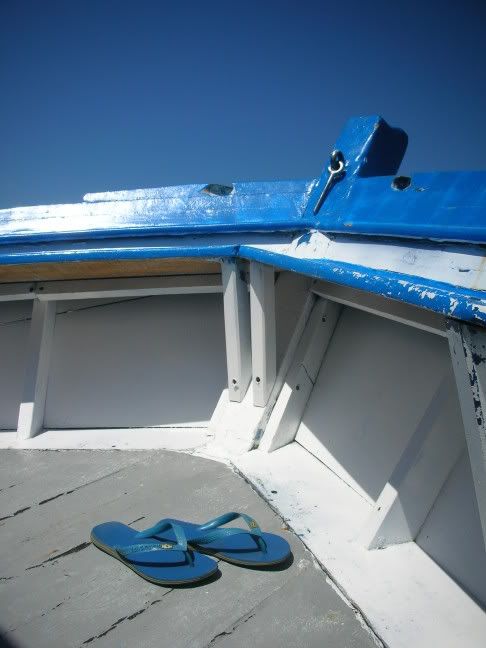
Old boat, Praia Lopes Mendes.


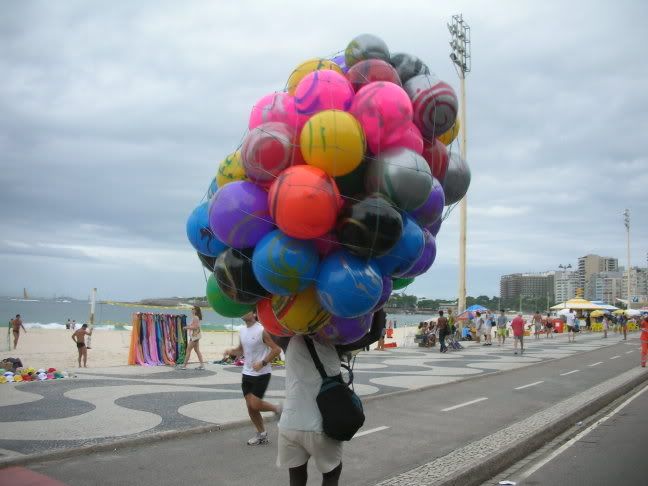
Ball seller, Copacabana.


Typical.


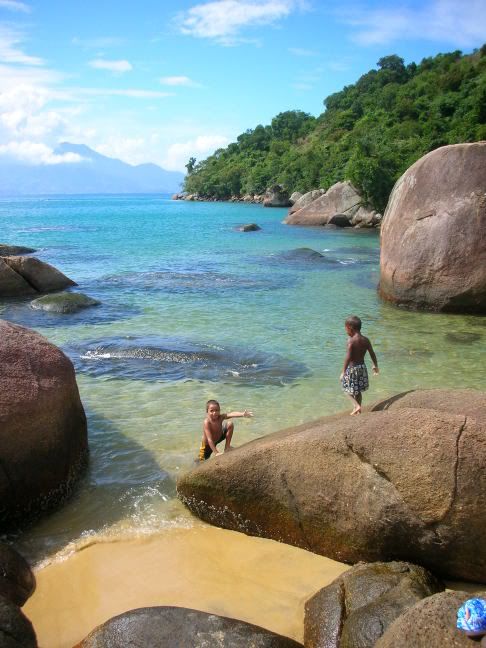
Dudes, Ilha Grande.

Monday, March 27, 2006

It had to happen.


This story takes place 15 minutes after publication of the entry below.

Cue dramatic music. Again.

Not such an interesting story, really.

I thought it only happened in Tokyo, but as I learned it also happens in Mexico; Transit Police push commuters onto trains in an effort to utilise every square unit of space.

I was most worried about not getting let onto the train at peak hour with my backpack. Large bags are not allowed on the metro. The transit police did not second glance, they just pushed a bunch of us through the open doors like an package too fat for the mail slot.

I was glad to be on the train, on my way to the airport, on my way to Santiago. I knew someone was going to try and pickpocket me whilst on the packed train, so I kept my hand on my pocket, guarding my slim wallet.

There was no way I was going to get pick-pocketed by any sneaky little kids.

Instead, I was pick-pocketed by two not so sneaky adolescents.

A few seconds before the doors closed, two dudes semi forcibly buried their hand in my pockets before I could think how to stop them without being violent. Then they were gone. I could not chase after them as I would have had to leave my big bag on the train. No option but acceptance.

I was not really upset, or angry. In fact, I was relieved.

I continued to the airport and sat down to sort my shit out.

Six hours later I landed in Santiago, less one credit card, one bank card, one drivers licence some cash and my student card.

No big deal.

Saturday, March 25, 2006

Perfect Day, almost.


Zocalo. The big square in the centre.


Passing the time.


Sweetheart, I gotta go. Some gringo wants to take a photo of us.

Diary of happenings - Wednesday 22nd March 2006, Mexico City.

8.00
Bought a newspaper. Cover story: ¨Cyclone rips homes in Australia¨

8.15
Drank two espressos and read the paper.

9.00
Visited two museums, always very relaxing.

12.00
Watched the festivities for the Bicentenario de Benito Juarez in Zocalo for about an hour. Fantasic.

1.00
Saw a neatly dressed, seemingly wealthy father and son pair sitting in the Park opposite the Palacio de Bellas Artes. The son had a t-shirt wih a swastika on the front, not so neat after all. Started an argument in Spanish. I remained pretty calm, but was right up in their faces. They were back-stepping and sweating. As they walked away the father yelled out ¨dirty Jew!¨ in spanish. I had a really strong urge to run back and break his nose.


1.30
Ate some Black Corn Torillas with avocado, tomato and onion. Not very tasty.

2.00
Watched men play chess in front of the Museo Mural Diego Rivera.

2.30
Listened to a band, then realized they were an Evangelical Church Group, so I went to the bar across the street.

2.35
Drank two tequilas and two Coronas whilst arguing with two old men. I think Brazil will win, they of course, KNOW that Mexico will.

3.30
Nearly had an aneurism when I saw my bill. Each teqila shot cost me $10 US.

4.00
Saw Brokeback Mountain. The audiencve laughed throught each intimate scene except when Jack (Jake Gyllenhaal ) visits a prostitute in Juarez. Silence. Gave the film 4/10.

6.00
Got asked out for a drink by a young man with slick wet hair and shaved arms whilst standing beside the candy bar. Told him I had already had enough, but thanks.

6.05
Headed back to my hotel and watched the evening news. Understood most of it.

7.00
Showered and got ready.

7.30
Took the Metro to the Auditorio Nacional. Buena Vista Social Club with Omara Portuondo. Good, not great. The auditorium is just too big for that kind of a performance. The atmosphere was not there. Still, her voice is transporting.

11.00
Whilst walking back from the station to my hotel I heard some brushes and horns. Not streetsweepers and commuters, the jazz type.

11.01
Peered down a set of stairs into the basement of an old Art Deco building. Jazz club!

11.02
Klesma group started. Thye whole place bumped and bounced throughout the whole performance. Had a little chat to the lead violinist at the end. Good bloke.
Left after a few gin and tonics.

1.55
Lay in bed and thought; perfect day, almost.


Right now I am off to the airport. I have a flight to Santiago (Chile) in two hours.

Wednesday, March 22, 2006

Terms and Conditions


Grigos call them Chicken Buses, beaten up American school buses with divine murals of hay-zoos airbrushed all over. I can think of two reasons why the term was coined; either because the passengers often carry chickens, or, the drivers play chicken with oncoming traffic whilst overtaking around blind corners on mountain roads. Either way, the term, however appropriate, is a gringo term and considered offensive to Guatemaltecos. Because I am a culturallysensitivejewishaustralianleftleaningantineo-conuniversityeducatedstereotype, I call them by their correct name, Camionetas.

Okay, the point is, I was on a Camioneta on my way to visit my friend Anton in San Pedro de Atitlan. Anton and I live one block away from each other in Melbourne. I took a Camioneta from Guatemala City to San Pedro. All was fine, weather and I. The road became more twisted and tangled as we joined the dots from highland village to higher highland village. Of course, as the road became more dangerous, the driver became more confident. At one point the shrill screams of bald tyres combined with landscape shooting past in a blur put me in a cold sweat. Freediving is relatively safe, I thought.

As we overtook yet another pickup around yet another blind corner, a truck came around the corner toward us. The driver braked quickly trying to slow down enough to tuck back behind the slow pickup to avoid collision. At that moment, if you had looked at my face you would have guessed that I had just taken a shot of homemade tequila and lime. I tensed all of my facial muscles into an ugly ball of over sunned skin and two week stubble, before hearing a crash of sheet metal and glass.

Don´t get worried though (Mum), the oncoming semi only took out the mirror. The driver didn’t really care much, he simply said something sharp in Spanish (a word that I had never heard), shrugged his shoulders and continued at the same smoking pace.

San Pedro, on the shores of a stunning volcanic lake would have been a special place in the past. Now, it is basically a gringo village occupied by Germans with dreadlocks concerned about upholding their image as a free spirit, whilst remaining categorically imprisoned. I went to have some beers with Anton at a bar called Buddha´s. Decorated with lovely Tibetan prayer flags, images of Buddha on the menu, the walls and in the bathroom the owner, Mike, had done a good job on cultivating a spiritual drinking hole. Complete with free pool. Mike was most proud of his brand new 21inch plasma screen display for the computer behind the bar. I am pretty sure Buddha would also have been proud.

I returned to Guatemala City in the following morning.

Top five things to do in Guatemala City:

1.Visiting the countries best museums and zoo
2.Dining fine in Zona 10
3.Connecting with the bohemian culture of Zone 1’s bars and clubs
4.Gazing on Guatemala from above at the Mapa Relieve
5.Leaving

Adapted from Lonely Planet Guatemala


Yes, it was nice to leave. I concede that Guatemala City is not the nicest places to be, infact it is at times awful. However, as is often the case a lack of tourists means people are more genuinely friendly. I genuinely did enjoy the few days I spent in the capital.

In my opinion it is not possible to properly understand Guatemala without visiting the La Capital. I was fortunate to meet Philippa, a Canadian lawyer of Haitian decent volunteering for a Human Rights organization. Philippa had been sent to Guatemala by the Canadian Bar Association for a six month internship working mainly protect the rights of female workers in the clothing and textile industry. Many of the workers are unable to read or write, yet are forced to work under formal contacts, which of course they do not understand.

Hearing Philippa’s stories helped me to further understand the difficulties that the people of Latin America face as the global economy encroaches deeper into the third world, raping its resources and people. I dig him, but I do not own a Che t-shirt. I am not a Pinko, just concerned, more each day.

Almost 3 of 15 million Guatemaltecos live in the city, a seething mess of markets and squares divided by deep dry canyons. The buses splutter about the city like wounded asthmatic donkeys. Municipalities are divided unto Zones, numbered 1 to 18. Some of these Zones, like 6 and 18 are no go, violent attacks, murders and rapes are frequent. Tabloids remind us daily. Unfortunately I do not have any stories to share about such things.

Again, due to time constraints I missed out the best of Guatemala. I did not travel extensively in the highlands. Many travelers that I spoke to considered the time they spent village hopping in the mountainous South West an enlightening and enriching experience. Almost one month passed as quickly as a long weekend, my time was up.

I spent the last few days traveling through the North of Guatemala with Philippa. We crossed the boredr to Mexico and visited the state of Ciapas. Chiapas is in the South East corner and is of the poorer Mexican states. It has a Pacific coast, but no Caribbean like the Yucatan Peninsula, where Playa del Carmen and Cancun are. Cough cough kill me cough cough.

Chiapas has a number of significant Mayan sites and beautiful waterfalls, for this reason there are many tourists here. Palenque was my third and final Mayan site of the trip. In Guatemala I visited Tikal, where 50 metre high limestone towers above a lush canopy. In Honduras I visited Copan, a small, but special place. During my visits to these places I felt that much of the information about the Maya that I was being fed by the museums, plaques and guides was inconsistent, crude, oversimplified and perhaps inaccurate.

Whilst atop one of the towers in Tikal, which I had reluctantly climbed, I met an archaeologist. Fransisco told me he did not believe indigenous people had ever been concerned with tourists scaling the sites. Perhaps only hypocritical culturallysensitivejewishaustralianleftleaningantineo-conuniversityeducatedstereotype gringos applying western value judgments based on issues in their own countries were concerned with such matters. Sorry.

Fransisco and I chatted for a while atop the tower. He was supervising reconstruction of the tower, of course only the sides visible to tourists. The other parts would be restored, but only functionally – simply to strengthen the tower itself. I learned more in that half hour about the Maya than over the previous month. I will not go into detail here, however I will share with you two topics that I am interested in regarding our understanding of these civilizations.

One
The term Maya is like sand. It does not exist. It is a simple term based on simple academic categorization. The Maya are many people, across many regions and periods. The different groups cannot be lumped together and called Maya. The term is blunt and only clouds our understanding. As we learn more about the different groups that constitute what we call Maya the more we begin to see how inappropriate an all encompassing term such as that is. Still, I have used it extensively because it is so entrenched in our discourse.

Two
From what we understand, the socio-political structure of the Maya, there is that term again, was admirable. Particularly in Copan (Honduras) there was clear evidence suggesting intelligent members of the community, such as those with an understanding of mathematics, astronomy and geometry were elevated to positions of power.

I believe this is superior to the Western, or ancient Greek concept of Democracy. From a purely theoretical perspective, the model is ultimately non-political. In situations where a population is reliant on the natural world to prosper and be happy, knowledge, not popularity is king. Armed with knowledge, these leaders were able to accurately predict and explain rain and sun, hot and cold, day and night. I may not be making much sense, nor is this discussion very helpful, however a romantic attachment to an ancient political ideology such as this never hurt no one. Unlike…

I was walking back from dinner behind a neatly dressed older gentleman wearing a t-shirt with the words “Maine – Honduras” on the back. I politely approached him and told him jokingly that I was surprised there was also a Maine in Honduras. No laugh. Instead he pivoted stiffly around, shiny silver hair in the moonlight, and replied “No, there is no Maine in Honduras. We belong to the Evangelical Covenant Church in Maine. We are visiting a sister congregation of ours here in Copan, Honduras. We have come to spread the word of Jesus Christ as our Lord and saviour.”

His patter was so polished that I quickly scanned around at his feet, looking for a tape player. Either that, or he was taking the piss. Nope, the real deal. I tried, I really did, but speaking to these people is impossible. Any questions you ask are quickly and efficiently answered with biblical rhetoric that is impossible to decipher. I walked away quietly, maintain eye contact, as the manual suggests.

At this stage I am at the end of my time here in Central America. Just arrived in Mexico City, an amplification of Guatemala City by almost 10 times. I will only spend one week in Mexico, four days in the capital. Mexico is enormous and diverse. It demands a long and dedicated trip. Perhaps if/when I return to Mexico I will set aside some extra time for some Guatemalan village hopping, via knife edge camioneta of course!

Off to see some Rivera and Kahlo now, have been looking forward to that.

Choose wisely,

Daniel


An almost perfect pyramid of French tourists at Palenque

Sunday, March 12, 2006

Freediving


Honduras has much to offer, however with limited time in central America I could only afford to visit a couple of places. This is unfortunately common.

I traveled for two days from Leon in Nicaragua to Utila, one of three Bay Islands in the Caribbean. Why go to the Bay Islands? Cheap SCUBA.

As I arrived by board I was stunned by the color of the water in the harbor, a light turquoise that you get from shallow reef and sunbleached sand. In an earlier post I included a picture of me sitting on a dock- that was Utila. It was like, wow.

I enrolled in a SCUBA course and completed my PADI Open Water Certification with little trouble. As an aside, I can wholeheartedly recommend Remy and team at Utila Watersports for your course if and when you visit.

PADI, it is a global brand that governs SCUBA schools and courses across the world in an attempt to standarise SCUBA to ensure safety and profit. The videos that you watch when undertaking a PADI certified course are more boring than talkback radio, but funnier than most sitcoms. Whilst watching the videos, four hours in one afternoon, I felt like a droog in reeducation.

PADI may be an acronym for Put Another Dollar In, or Pay in Advance and Dive, Idiot. SCUBA was great, the first dive was a buzz. I sat on the dock the afternoon after my first dive and tried to understand what it was about diving I enjoyed.

It was not the abundance of fish. It was not the Spotted Eagle Ray. It was not the Lobster. It was not the Moray Eel. It was not the Coral. It was not the warm water, nor was it the sensation of breathing comfortably underwater for the first time since the womb.

It was the feeling of three dimensions. Many of us have experinced this before in backyard pools and in the sea. However, being under the water for an extended time, with the freedom to move up, down, left, right, forward and back was amplified.

Hangon, If I can hold my breath for a while then I can do this for free, whenever I want, with little equipment. That afternoon I went to the Bay Islands College of Diving and met with Rok, a 6 foot 4 Slovenian with a shaved head and a soft accent.

Rok, and his partner Jennifer (who can freedive deeper that him) had submitted an outline for a PADI certified freedive school on Utila. Anyway, Rok surprised when his course was approved for certification, simply because PADI has no interest in promoting an arm of the sport that will raise little or no revenue.

I should probably explain what freediving is, briefly.

Freediving is a recreational sport that involves diving deep or for a long time with no SCUBA equipment. Some simple equipment is used, such as weight belts, fins, mask, and wetsuit. Competitive freediving is a dangerous sport. There are several categories. No limits freediving, where the competitor takes a sled into the blue a rides a balloon up when he/she is ready to turn around, is crazy. In general, there are two things that limit how deep we can dive; how long we can hold our breath if we can equalize as we descend.

Equalizing is simply what you do when you are on a plane, blow and yawn and stuff to stop your ears hurting.

Patrick Musimu recently dove to 209 meters. He exceeded the previous mark by 38 metres. It is rare, in any sport, that records are broken by such a large margin. Musimu´s record however has not been recognized by the sport´s governing body AIDA. There is a dedicated page on their website explaining, in convoluted legal language, the reason the record cannot be accepted. Musimu was able to achieve this depth by filling his sinus and middle ear (the airspaces inside his head) with seawater during descent eliminating the need to equalise. He is the only person who can do this, right now. I have not yet tried. Because freediving is a pure and natural sport, you go as deep as you can and if you come up alive you win, much of the freediving community recognizes Musimu´s record.

Okay, so Rok took me and a couple of other budding idiots for some dry training, that is, classroom stuff. We learnt some basic theory that would help us dive deeper and safer.

After a very light lunch of water and a banana (digestion uses precious O2), we took the boat out to the reef and lowered a 10m line into the water. The goal was that by the end of the day we would be able to dive to 10m and return safely.

I lay on the surface face down and relaxed. I filled my lungs with as much air as I could using a special technique, which I am pretty poor at. I pinched my nose with my left hand during the descent as I dove straight down. On the first dive I was surprised to find that I had reached the end of the line. Looking up, my stomach sank. I had never experienced such a feeling. The surface was well above me, and all was silent. No bubbles from the regulator, no bulky equipment, no snorkel, no one else. I felt that I had sufficient air to checkout the reef fir a bit, but maybe, considering it was my first dive, I should return to the surface.

I continued to practice, following all of the rules and diving a few meters deeper than the line, hanging out there for about 1 minute at a time. I enjoyed SCUBA, but freediving gave me a much more intense feeling. I was elated, on a chemical high. Happy Daniel.

After a break and some more talk we moved to a deeper site for some more dives. This time, the line was 13m long and the sea floor 17m below. I wanted to make it to the bottom. They tell you to never look at the bottom, only look at the line as you descend. Almost impossible.

All I could think about was the bottom. I made it to the bottom and wanted to go deeper, but the seafloor was a obvious obstacle. I did however forget to do something very important.

In addition to equalizing the airspaces in your head, you must (as with SCUBA) consciously equalize the airspace in your mask by blowing air into it through your nose. I had been doing this on every dive, however when you have no air, the last thing you want to do is waste some by equalizing your mask. I later learned that you can always suck the air back into your lungs from your mask as you ascend.

I got barotrauma of the eyes on my deep dive. At 17m I could feel my eyes getting sucked out of my face.

Normally, the eye is protected from barotrauma because the eye is
filled with non compressible fluids, the aqueous and vitreous humors.

A mask has air filled space that is compressible, affecting the
eye and it's adnexa.

If the diver does not expel gas through the nose into the mask on
descent, negative pressure develops inside this space, sucking the
eyes and lids toward this space.

This negative pressure results in marked lid edema and bruising as
well as bleeding under the conjunctivae of the eyeballs.

Vitreoretinal surgery with air placed in the eye contraindicates
diving so long as any of the bubble remains. Pressure induced changes
in the volume of these bubbles may result in hemorrhage inside the eye
and also may result in partial collapse of the eyeball.

Adapted from About.com

Immediately after descent my eyes swelled and dark rings formed. The following morning I woke and the white of my eyes were red with blood. Oh well, didn´t really hurt, I just looked like a monster. No photos of this will be posted, as Blogger.com will shut me down as per inappropriate content regulations.

Freediving is a very spiritual and individual pursuit. Each afternoon I try to practice the breathing techniques I have learned. Rooted in Yoga, they are essentially meditative and I am able to relax and focus on "nothingness". I am getting better at each day.

Now, more than two weeks later my eyes are finally clear again. I am busting to do some more freediving, in Israel or perhaps Egypt in coming months. I want to reach 100feet, 33metres. Entirely possible. Yes, I am hooked.

Hopefully I will be able to tell you all about it.

With love from the depths,

Daniel "TrueBlueJue" Strauss

Sunday, March 05, 2006

Some good, some bad.

Corn on the cob, smoked iguana, dried iguana, dried fish, fried fish, beef stew, pork stew, fish stew, lobster, prawns on a stick, meat on a stick, tacos, beans, fried beans, black beans, red beans, white beans, strawberries, rice pudding, tortillas, fried chicken, criole chicken, fried pig skin, white cheese, capsicum, tamarindo, red jalapenos, green jalapenos, sardines, chorizo, raw tuna, bananas, platanes, fried plantanes, boiled bananas, fried bananas, watermelon, watermelon with ham, pizza, pineapple, oranges, papaya, coconut, mango, green mango, pumpkin, onion and tomato, broccoli, cabbage, peas, beetroot, carrot, rice, guacamole, salsa, eggs, fried eggs, a drink made from milk, cinnamon, egg and vanilla bean, coffee, various pastries, ice cream, shaved ice, fresh homemade drinks made from whatever, roasted nuts, bean stew, mashed beans, bean stew with sausage, chicken hearts, chicken feet, cow throat, cow stomach, rum, beer, chlorinated water from the tap, orange juice, Chilean wine, and hot dogs.

Thursday, March 02, 2006

Facelifts, Farming and Freediving

To preface, I am currently reading Hunter S Thompson’s Rum Diaries, about his time in Puerto Rico in the 1950s. MHDSRIP.


Many travelers I have encountered love Grenada. Grenada is the richer of the two original colonial centres in Nicaragua. Unlike Leon, Grenada is a wealthy city home to the middle and upper-class. Of course, as many travelers had noted, this makes for an aesthetically pleasing city. The Plaza in its heart is thoughtfully landscaped and clean. Skinny Japanese and fat American tourists lap the cities interior in horse drawn carriage. How quaint. Sure, it is a lovely city to be in but I found it difficult to get any real insight into Nicaragua, the second poorest country in the Western hemisphere. I needed to do something naughty, something to write home about, something Hunter S Thompson-esque.


By chance, I was in Grenada for the Annual Nicaraguan Poetry Festival. On Nicaragua’s currency, the Cordoba, appears Ruben Dario. Ruben Dario (1867-1916) considered one of the most important Latin American artists, changed the course of Spanish poetry with his writing. In Nicaragua he is a national hero.


On the final night of the festival I sat in the Plaza and listened to a recital. A small old man in a linen suit with a felt hat and waxed moustache, seventy going on fifty, read a Dario poem. It was about Autumn, I think. He spoke slowly and carefully slowly, clearing his throat now and then. For much of the reading he stared over the audience, eyes glazed over. I am sure that this was a poem he had an intimate relationship with. After the reading I went back to my hostel and showered.


I have not gone out much on this trip, but this night I was planning on ingesting some beautiful Nicaraguan rum and dancing. I may even get up to some Hunter S Thompson-esque activity. I left for town with excitement.


My brisk walk toward the Plaza was interrupted suddenly by the sight of finger food through a large window. A party celebrating the end of this year’s festival was in progress in a hall on the main Plaza. I peered deeper in and was shocked. I saw diamonds and pearls. I saw evening gowns and terrible haircuts. I saw catlike facelifts, incision scars still pink. Teaming with important and wealthy Nicaraguans, it was exactly what I was looking for.


Wearing jeans, a navy singlet and thongs, getting in presented a problem. I looked like some dude trying to look like an Aussie trucker. No problem though, I have got the ¨I know what the fuck I am doing and I am just gonna keep walking don’t try to stop me I am very important even if I do not look like it¨ walk pretty much down. If ever, now was the time to use it.


I got to the bar with only a dozen or so rejecting looks. Not a bad score. I ordered a Flor de Cana with lime and started to circulate awkwardly, free booze in hand. I confidently approached a tall young man wearing black rimmed glasses and a tasteful grey suit. I introduced myself in tipsy, but utterly correct Spanish, and he responded in near perfect English. I hate that. Jorge and I got on quite well. Granted, the conversation was lubricated liberally with rum.


Jorge told me about his business. His family owns land across many parts of Nicaragua. One of six brothers, he manages several farms but lives in Managua (the default capital) hundreds of kilometers away. He drives his Range Rover to visit the farms very rarely, once a month perhaps. His family cultivates cash crops, Jorge’s is a sesame seed farm. The bulk of his transactions are with large Japanese companies. At this point in the conversation I had a vicious craving for sushi. I of course did not ask him how much he earns, but I did ask about wages for his employees.


The workers on his farms choose to work their 6 hour day from 6am to 12 noon. They all work seven days a week. According to Jorge´s drunken calculations he pays his workers, on average, $30 US a month. I hope, for his sake at the very least, that Jorge is familiar with Nicaraguan labour laws which stipulate ¨The minimum wage is set through tripartite (business, government, and labor) negotiations … in agriculture and livestock must earn a minimum of C$450 (US$36.60) per month plus meals; the legal standard workweek is a maximum of 48 hours, with 1 day of rest week.¨


Granted, Jorge is a lovely person, and is in possession of the address for this blog. Hi Jorge, if you are reading. His mother however, is an uppity taught-faced dragon lady in red. Hi Carmen, if you are reading.


Okay, so the story doesn’t quite live up to Hunter’s work but I now have a clearer picture of what life is like for Nicaraguans. “Mission accomplished.”


After walking the rum from my veins in the morning I made my way to Leon. Leon is, in antithesis to Grenada, a working class city and home to the Sandinista party. Neither of the two prominent Ronalds, Reagan or Mac, are welcome here. It was my intention to spend no more than a couple of days in Leon. I needed to keep moving to the Bay Islands in Honduras. Again, plans change.


I quickly fell for the city. If time permitted I would have stayed in Leon for a number of months to do some volunteer work and/or teach English. During my 6 day stay in Leon I made friends with some people that had done exactly that. Tara from Canada was teaching English after falling in love with Leon the pervious year. Eric, from France, also. I did nothing particularly exciting in Leon. I visited Ruben Dario’s grave. I visited the wonderful galleries and museums a couple of times over. I walked the streets and chatted in Spanish to whoever would pretend to listen. I went for a swim at the local pool and tried some breath holds in preparation for the following week.


I am going to save the next installment, Freediving.


Vandalism in Leon

Sunday, February 26, 2006

Battles and Baseball


Okay, alter all this time I have spent diving and staying outside a 100m radius of any computer, it is time to told you about the final week that Eliot and I spent together.

We took a short flight in a short plane across Lago de Nicaragua to the point at which the Rio San Juan meets the lake before it snakes through to the Caribbean. From here we took a three hour boat down the river to a place called El Castillo. The boat ride itself was an unforgettable experience. Engine humming we saw humming birds having sex with flowers, large birds of prey circling and all of that cool stuff that you expect in an ancient remote volcanic wetland.

I mentioned in an earlier entry that the Rio San Juan and its El Castillo is historically significant. Why?

When the Spanish first explored the river in 1525 they recognized the site's strategic potential and began construction of a fort. Completed in 1673 it was the largest fort in Central America and, armed with thousands of weapons the fort would be the primary defense against forces fighting for control of Grenada.Would it work?

In 1762 the Seven Year War between Spain and Britain started when the governor of Jamaica began an invasion on Nicaragua through the Caribbean mouth of the river. The Spanish, led by Jose Herrera, had no intention of fighting off the 2000 or so English backed fighters until they reached El Castillo which was two thirds the way up the river toward the Lago de Nicaragua. The Spanish waited and prepared. We all know how lazy they are anyway.

On July 29th 1762 a battle began. The English had a difficult task. Standing atop El Castillo it is clear that the Spanish had the strategic advantage. El Castillo is atop a hill, at a bend in the river where there are small rapids. Of course, both sides suffered losses. Jose Herrera, Commander of the Spanish forces died during the final stages of the one month battle. Okay, this is the good bit.

Jose Herrera had a 19 year old daughter, Rafaela Herrera. She was apparently pretty hot. After the death of her father Rafaela took command of the forces and ended one month of tropical bloodshed with Spanish victory. That is one of the reasons I am learning Spanish I guess.

Thank you Eliot for inspiring my interest in this story.

The town is gorgeous. Small, with no roads the riverside it is a friendly community. Our short stay was a lovely respite from the backpacker-heavy coastal towns of Nicaragua.From there we took another couple of memorable boat rides to the Archipelago of Solentiname on the Eastern side of Lago de Nicaragua.

We had been very excited to visit the islands, originally home to a small community of poets and artists. Apart from some local women selling painted balsa wood fish and three German art buyers staying on the other side of the island, Solentiname could no longer beconsidered an artist colony. It is however, a beautiful place. The community is isolated and interesting. Eliot and I stayed at a small hotel run by one family. Later we found out that that the entire island was populated by that one family. The patriarch of the island has18 children, more on the way. His mother has 320 descendants. I am serious.

On the Sunday, toward the end of our stay we were invited to a baseball game between the two major islands (and families) in the archipelago. We took a boat across the island with our team, excited about the game ahead. As we landed on the beach on the opposing island I had visions of the battle that unfolded at El Castillo some 500 years prior. I imagined troops landing on the shores of the river in a similar fashion. We traversed the island in the heat across banana plantations until we reached a clearing. Wonky lines painted between rice sacks formed the diamond. The referee was dressed in his Sunday best. The teams stood in line for the national anthem. I shed a tear, it was truly fantastic. The game itself was a little tedious, so we sat and drank beer with our team for a good eight hours.

Eliot and I parted ways a few days later, we intend to meet again somewhere in Brazil.

In the next entry I will tell you about farming, facelifts and freediving.

Once again, thanks for tuning in.


Guard atop El Castillo


When two tribes go to war

Friday, February 17, 2006

Criminal Behaviour


It is not that I am lazy, or rather my laziness is not causing the current hiatus in communication. I am simply, in a place where it is criminal to be on a computer. I am sure of it.

I am on Utila, the smaller of the two Bay Islands in the Caribbean off the cast of Honduras.

I am here to do an Open Water SCUBA course and eat fish. After my open water course I intend to do a Free Diving course.

Here are a couple photos to illustrate
.

BIG post coming...


Thursday, February 09, 2006

I like lists


Purchases and Acquisitions
  • 2006 Panama Jazz Festival t-shirt
  • Ubiquity records t-shirt with the slogan ¨Music is the weapon of the future¨.
  • A small knife, mainly to cut fruit and to fight bandits.
  • 50 cent bottle of shampoo, to use as soap.
  • One pair of Ray Ban Aviator sunglasses.
  • One Time magazine.
  • On jar of Skippy peanut butter. Smooth, could not find crunchy.
Books
  • Yann Martel - Life of Pi
  • Patrick Suskind -Perfume
  • Jonathan Safran Foer -Everything is Illuminated (Second attempt)
Listening
  • Nick Cave and the Badseeds (live)
  • Fat Freddys Drop (live)
  • Johnny Cash (live)
  • The Roots (live)
  • Donny Hathaway (live)

Wednesday, February 08, 2006

A challenge

In my entry below I said I was about to head to Solentiname, a rempote archipelago of islands in Lago de Nicaragua.


Well, things change.


We decided to stay on the beautiful Pacific coast of Nicaragua for a couple of days, giving me time to plan a personal challenge and piss fart some more.


For a couple of days I trained for my challenge. What did my regime involve? Mainly bodysurfing, swimming and walking.


What was the challenge? We were staying in a small bay that had little surf. The two beaches at the place we were staying were separated by a large craggy point. I swam out to sea at each beach and scoped out the challenge. I figured the point was 200m long and 100m wide at the narrow tip. I figured that the distance from sand to sand, beach to beach was about 500m on low tide. I figured.


The following morning after I had digested my breakfast of rice, beans, eggs, coca cola and oreos with peanut butter I put on my black speedos and my black goggles.


The tide was low, the water still and the sky grey. I was ready and quietly confident that I could meet my challenge. I have done my share of ocean swimming, surfing and stupid things. Sure, I was ready.


Eliot watched as I walked to the waters edge and swam into the distance. The swim out to the point was long, but not difficult. I was swimming at an even pace with steady breathing as the water became a darker blue and then navy grey. Almost as I rounded, perhaps 20 minutes into my swim I saw a bird dive into the water at speed, wings in a W shape.. Out it came not more than a second later with fish in mouth. I have never been scared of things in the water, but just for that second my heart slowed and I felt dizzy. Then hunt and kill that unfolded in front of me ´was followed by scary projected images in my mind’s cinema. I shook it off and settled back into my rhythm and swum further toward the point.


My goggles were very dark, mirrored on the outside. I was finding it difficult to see as I neared the open water. As I swum nearer to the rocks the water beneath me became more turbulent. It was not choppy, nor was there swell. Rather, the water beneath me felt as if it was shifting in a tectonic fashion. It moved me meters at a time toward the barnacled black rock and then out to sea. The preferred direction of pull was of course, out to sea.


As I rounded the point, the last few meters took many strokes, I realized that my narrow point was in fact a whole other bay made up only of a only a rock shelf. No problem, just another couple of hundred meters to swim.


I swam a few strokes and then, as one of the movements of water shifted me toward the rock shelf, I felt a broad punch to my stomach and chest. I didn’t hurt, so I swam on. There was a mass of water moving in and out from the newly discovered bay that was enough to keep me in one spot for ten minutes of solid swimming. I had not really moved anywhere. I flipped over onto my back to look at my stomach. I had been washed onto a rock that was just below the surface. I had not seen it beneath the water. Goggles too dark. The cuts were not threatening but for some reason I became fearful.


I have never felt out of control in the water before. Not that I can recall. Remembered the fishing bird. I thought of big things in the darkness below me. I could not see sand anywhere, only wet rock. Fear is a powerful emotion. I felt energy drain from me like rice from a slashed sack. I felt like a speck. I felt vulnerable. I did not panic, I was confident in my abilities to get back to sand safely. I had not entered into a challenge that was beyond my means. I was however, beaten. I floated for a few minutes, swallowed my pride along with a gallon or so and made my way back around the point. I spotted Eliot and a couple of friends standing on the point in the distance, I swam to the rocky edge and carefully made my way out of the water.


As I walked toward them, although defeated I was happy. Better that I tried and failed than never tried at all, isn’t that what we are meant to say? I inspected my cuts. Extensive but fine.


I walked the rest of the way around the bay to my destination. My heart would not slow. I kept looking back at my challenge. Dozens of ¨if only I had…¨ scenarios flicked through my buzzing brain.


If I would have stayed at that place longer, I could have done it. Although that is my ego talking, he promises me that he tells the truth and nothing but the truth. This time at least.


That night we around a bonfire on the beach toasting marshmallows and talking about socialism, pineapples, happiness, German engineering, steak, Scandinavian currencies and of course, how cool fire is.


Then, in the morning we surfed and left for Solentiname.


The essentials


Walking back around the point


Could have been a kitten


The point
(Thanks to Eliot for the awesome pic)

Monday, January 30, 2006

All that Jazz


Spot the frisbee


A ¨No Jazz Zone¨


Another cool cat


On Saturday the 21st of January 2006 David, Lotta (USA, Sweden) and I headed to the old part of Panama City where the Panama Jazz Festival was being held. Set amongst gutted and crumbling buildings reminiscent of film sets with only facades remaining, jazz played. A small crowd early in the day stood drinking Nicaraguan rum and talking about life, politics and soccer. The jazz also spoke of such things. We stayed for a few hours that afternoon sweating in the still heat of Panama’s old city, but later returned to the hostel for a nap, for tonight was the main attraction.

We went back after sundown to see a big band close the festival with a stunning extended set of uplifting Latin Jazz. The focus shifted to and from each of the key members, each doing their part to capture the spirit of Latin America with trumpet, vibraphone, voice or drum. We danced and sung with locals, and when the party was over we danced and sung some more at a bar inside one of the aforementioned buildings. An Argentinean had setup an impromptu jazz bar inside an abandoned building near to Noriega´s bombed house.

There was no roof. The perfect place to be on a hot night in Central America. The band played a set of minimal jazz, peppered with Radiohead and other tasteful covers. Daniel will never forget hearing Karma Police staring into the Panamanian sky, rum in hand on his penultimate day as a 23 year old.

I was in a happy place, but it was time to move on and see some more of Panama. I travelled to Boquete in the Northern Hhighlands. Built at the base of Volcano Baru (3475m), this cute mountain town is known for its flowers and coffee. I sat in the cool mountain air gathering my thoughts and sipping wine to celebrate my birthday.

I had intended to hike to the top of the volcano, however for a few reasons it was not possible. Along with you, I will just have to imagine what it is like to be atop a volcano at sunrise looking left to the Pacific ocean right to the Caribbean sea.

I did however do a 7km loop around the small Pueblo´s in the area. I had to hurry the hike so as not to miss the bus back. I covered the hike in about an hour, and was rewarded with a coffee made fresh from beans from the plantations I had been walking through. Best coffee yet.


The following day I started my three country traverse to meet my wonderful friend Eliot Golstone in Nicaragua.

Here is a map if you need to get your bearings. Boquete is near David.

Not many interesting stories here, except that as I crossed from Costa Rica to Nicaragua I saw a truck driver shake hands with a customs official. The shake of hands was merely a means of passing over 50 American dollars in exchange for a blind eye.

I arrived at San Juan del Sur, a small gring town near Lago de Nicaragua on the Pacific Coast. Eliot and I had organised to meet at the first internet café listed in the lonely Planet guide. Upon arrival, I was told that that internet café no longer existed. I went to the next one, found an email that Eliot had written only minutes prior telling me he had a room at a little place called Casa del Playa 28.

Where was Casa del Playa 28? Directly across the road. I picked up my backpack and went inside the hospedaje. I called out ¨El?¨ Eliot ran out of the communal shower in a small white towel and we hugged.

That night we talked Australian, the first time in a while for both of us. We drank beer on the beach and spoke stories happy and sad. That night we went to a little fiesta at a restaurant with some friends we had made in the town. The fiesta had a DJ! We drunk and danced to crappy Latin pop and ten year old commercial dance and r&b. It was fun, kind of. I have one CD with me on the trip. I approached the DJ booth (cardboard box on a chair) and asked the DJ Menni if he would let me fool around. I put the CD in the player, put on the headphones and went to work. DJ Menni´s anxieties were eased when it was clear that I knew how to operate a mixer. DJ Menni and I went one for one for a little. The Latin version of Beat It went down a treat.

We woke the following morning and rode In the back of a ute to Playa Madera just a little North. We then waltzed along the beach for about 10 minutes to Playa Matilda with our packs and some supplies where we have spent the last three days.

There isn’t really much to share about the last three days. Reading, swimming and eating.

Tomorrow Eliot and I will make our way to Isla Solentiname, an archipelago of islands on the eastern end of Lago Nicaragua.


http://www.infoplease.com/images/mapcentralamerica.gif

Click above for a neat little map of Cental America


Saturday, January 21, 2006

Panamanian tale

Last time we spoke I was with Brian in Costa Rica about to get some food.

Brian hastily left for home, I am once again a lone sailor.

I set sail for the southern Costa Rican border with Panama- by bus. It had been raining for a few days now. As I travelled inland toward the border crossing I realised that the rain had, in addition to making my Carribean holiday wet, flooded the locals. The rivers had swelled at a time when rain this heavy is not expected. Although it is the dry season, the region often experiences heavy falls near full moon. The bus passed flooded farms, flooded animals, flooded open sewers. I saw children wading to their front doors waist deep in grey water. My week was rain affected, but their life was.

I was listening to Johnny Cash when the bus stopped.

The river had completely covered a section of road about 50m wide. The water was flowing, but not at a rate that made it unsafe to cross by foot.I asked the driver how far it was to the border, he said about a kilometre. Whilst the other whiteys on the bus sat waiting for the waters to miraculously part, I followed the ticos to the waters edge and removed my pants, took off my backpack and held it. If I fell I did not want to a 15kg burden.

It was still raining heavily, and as I crossed I felt like a hero. Sad I know, but it is these moments of quasi-achievement that punctuate my trips.

The border crossing down the road was far less challenging. After crossing I travelled to Bocas del Torro, a booming Venice-esque town on a archipelago of islands. Physically beautiful, in recent years it has become very expensive. Real estate in Bocas and sorrounding islands has become the new destination for wealthy foreigners seeking sun and capital appreciation.

The ride through the disused banana canals to the island was memorable, think Apocalypse now minus Marlon and Charlie. Add Daniel and Francois, my new French-Canadian friend with whom I shared an overpriced under kept room.

I spent three nights in Bocas del Torro. Snorkeling, eating seafood, drinking beer swimming and flirting with frogs (little red ones, see below).

Now, I am in Panama City wjher I will spend a couple more days.

Some of you may know my Nana. When Ilse immigrated to Australia more than 50 years ago she came on a boat through the Panama Canal. This morning I went to pay a visit.

Standing on the observation deck above the Miraflores locks on the pacific side it was very cool knowing that Nana had been here. Very cool.

Get your exercise books out.

The Canal is 80km long, it takes most ships 8-10 hours to complete the passage, however including waiting periods ships are usually in transit for 24 hours.

The Canal makes use of existing rivers and wetlands that have been further flooded and deepened to create a passage through the isthmus. Some sections, up to 13km long have been completely cut from solid rock. The project was first envisioned by King Charles V Of Spain in 1534, twenty four years after Christoper Columbus arrived in Panama. The task itself was begun by the French in 1880 but remained unfinished until the Americans bought the rights for $40million in 1904. Ten years later, after thousands of slaves had died, the Canal was finished.

Although primarily Jamaican slaves, some came from Europe, the Americas and of course, Africa. This afternoon I walked into an air-conditioned lobby of an expensive hotel. I asked the man behind the desk where a barber is. He had a creole accent. I asked him where he was from. He told me that his grandfather had 'come' to Panama from Jamaica to work on the Canal where he died of yellow fever, a common fate. We shook hands, he said "Yo bi avin a good trip in di world bra." I then went and had a shave and a haircut for five bucks.

Tomorrow there is a Jazz Festival in the old city. Cannot wait. Will report back to base.

Thanks for tuning in, or out.

Here are a couple if Panamanian cats.


Friday, January 20, 2006

Red Frog Beach

The rainy day on Red Frog beach in Panama turned out okay.


Wednesday, January 18, 2006

Costa Rica in pixels


Yes, I know.


...and cleaner


Thomas & I, Brian & Thomas.

Monday, January 16, 2006

The rich coast

Costa Rica, or Rich Coast, is.The greenback has penetrated this place. I am sure that it is difficult for locals to get by in the towns that have become tourist destinations.Both the prices and the tourists are high, which makes my experience here a little less pure. However, it does give me the opportunity to reflect on the sad state of the world. WAIT WAIT WAIT. I am not saying that tourism is an evil. It has benefits of course. Nor am I saying that pot-smoking, cashed up Germans and Americans with henna tattoos and linen pants are indicators toward the end of the world. I am just being bitter, it makes for more interesting reading.Now for the sweet contrast.

I have met a young Filmmaker from NYC. Brian, or Woody Allen as our Argentine friend aptly branded him, and I travelled the same route as I had the year before. San Jose to Manzanillo on the Caribbean coast. As we neared the lush east coast the palms became lower and broader. I recalled seeing that river. I recalled seeing that town. I am almost certain that same dog barked at the bus in the same way last year.

The unfinished cabinas in which David and I stayed at last time were now, making them unaffordable for us.Brian and I found a cheaper place to stay. We had some rice and beans, and went for a swim. No doubt I will say this over and over, but there is something healing about being in the ocean. All of my negative feelings were [cliche alert] washed away [end cliche alert].
Brian shares the same sense of humour, and tragedy as me. Although he is a little more tragic – not a bad thing if your are reading this mate. Early on I asked him which is his favorite TV show. Many of you have, at this point guessed what he said. Correct. Curb Your Enthusiasm. I found it difficult to curb mine when he said that.

We also put Miles' Kind of Blue in our top 5 albums. However, he chose the White Album whilst I prefer a stroll down Abbey Road.

Travelling with Brian has been a welcome vacation from the vacationers. In addition, it has allowed me to get in touch with my inner New Yorker and view him in third person. When I travel, my inner New Yorker takes a back seat. I become less manic, more logical and also, more tolerant of unpleasant situations. WAIT WAIT WAIT. I am not saying that everyone in New York is manic, illogical or intolerant. Rather, my inner New Yorker – a behavioural amalgam of Larry David and John McEnroe – is.

After we sorted out some of Brian's crises the rest of the afternoon was spent strolling up and down the beach people watching and playing frisbee with local kids, who later tried to steal my frisbee. I broke one of their arms. Shouldn't have that problem again. At night there was only one thing on my mind. Last year, David and I had feasted night after night on sopa de mariscos (seafood soup) from the only restaurant in the town.The waiter must have noted our strange obsession. Raymond actually remembered me. I was not disappointed. Last night, it rained. this morning it is still raining. Apparently, on full moons it rains for a few days. I am sitting in a tiled internet cafe - flooded. The young girl that works here is doing a good job mopping it up, as this rich Australian sits by and types.

Off to get some food,

Daniel

Just a few couple of LA photos for you cats


Saturday, January 14, 2006

Jose y los pussygatos

Buenos insert timestamp here,

I am in San Jose, Costa Rica.The Qantas lady at check in in Melbourne last week called it San Josie, as in, "....and the Pussycats". It is pronounced San-ho-say.It just may be, that in the future the pronunciation will change as "Ticos" pander to the requirements of cashed up American tourists. And Australian tourists. Except me, of course. Costa Rica has been a country of convenience thus far. I got my Brazilian visa. I got over my jet lag and got my feet.


Tomorrow I head to the Caribbean coast where I will spend a few days reading and eating seafood. From there I will Cross the Southern border into Panama for about 10 days. The bus leaves tomorrow morning at 6am, which will be difficult.

I have, to be honest, been a little lonely since arriving in Costa Rica. When I arrived I did not realise how jet-lagged I actually was. I was probably not being my friendly self, the primary cause for my loneliness. It was not a nice feeling, particularly when I knew that I would be, in the main, by myself for the next 6 months or so.

One good sleep later I am back to normal.

Getting my Brazilian visa was fun. I went to the Embassy yesterday, but the ambassador was in hospital. Depression was the reason I was given.

I again today. I am pretty sure that Snr Sergio was over his depression. Sixty-five years old maybe, white hair, white eyebrow, tanned and quite short. In fact, just think Brazilian Bob Hawke. He was being friendly to the extent that if I had not left before he had a chance to, he would have asked me out for a romantic dinner of fried chicken, beans and rice.

This afternoon I just piss farted around.

I look forward to the next leg of my trip. I will hopefully have some more exciting tales for you.


Right now, I am quite over hostel life.

Hasta sometime later,

Daniel


Friday, January 13, 2006


I will be brief, but not short.

I am sitting in the Qantas club in LA Airport. Not a member.

Had a chat to the Marketing Director of NBC, John XXXX, in the line for the baggage scan. He went through first and I saw him enter the Qantas club. I followed. Not a weird close follow, but a "follow that cab" follow. I approached the desk and said "I am not a member here, buit I am a nice Australian who would like to use the internet to email his family and closest friends." John was already in the hallway to heaven but overheard me. He about-faced and invited me in with his guest card. How sweet.

The icing on the cake: As I walked away, the lady behind the counter said to me, "I would have let you in anyway, Daniel."

The lollies on the icing: I get to tell you this whilst it is still fresh.

John gave me his email also. Might have to see if I can blag my way in to a job at NBC as well as I blagged my way in here.

Lots of bums in Venice beach. A bum is an American colloquialism for a homeless person. Also lots of palm trees. I pretty much just hired a bike both days and rode around looking at shit and talking to strangers.

The food here is terrible. Really terrible. I am not an accomplished writer enough to describe how terrible.

Three celebrity spottings.

1- Steven Wright
2- The Rock
3- George Hincapie

I am off to Costa Rica in one hour. Very excited.

Enjoy these photos. Print it out in A3 and print the word "CALIFORNIA" on the bottom. Stare, and dream your dream.

With love etc,

Daniel


Monday, January 02, 2006

Leaving soon...

I hope the festive season has brought many laughs and little heat stroke.

I leave for an overseas trip next Tuesday the 12th.

I would love to see you all before I go.

If you are able to please pop in to Der Raum this Friday the 6th for a drink and a laugh after 8pm.

Later in the night I will be playing a few records if you feel like hanging around to heckle me.

Hope to see your smiling face,

Dan


Der Raum is an award winning cocktail bar on Church Street in Richmond near the corner of Swan Street. It is small and hard to find. Look for the Holsten sign.